How College Orgs Are Helping Queer Students Become Themselves—One Chappell Roan Song At A Time
PUP Kasarianlan and FEU SAGA are giving queer students the room (and the right people) to figure college out.
Published on Jun 30, 2026
There's a specific kind of freedom that comes with being a college freshman. It's not necessarily the freedom of knowing exactly who you are. In fact, it's the freedom of not having to know yet.
College is often the first time we're given enough distance from our hometowns and families to start asking bigger questions. Suddenly, we're surrounded by people who grew up differently, dress differently, and seem to move through the world with a confidence we're still trying to figure out. We start experimenting with our identities, discovering new music, new politics, new friend groups—sometimes entirely new ways of understanding ourselves.
That process of becoming can feel especially intense for queer students. Maybe you've spent years wondering why your "celebrity crush" didn't feel quite the same as everyone else's. Maybe you've experimented with fashion, pronouns, or labels in private before ever saying them out loud.
The experience of questioning, exploring, and becoming is something that queer student organizations like Far Eastern University's Sexuality and Gender Alliance (FEU SAGA) and Polytechnic University of the Philippines (PUP) Kasarianlan have spent years witnessing firsthand. And if there's one thing they've learned from generations of students, it's that college isn't really about arriving as a fully formed person. It's about giving yourself permission to become one.
College Doesn't Have To Be Scary
If there's one universal college experience, it's realizing that everyone else seems to know what they're doing while secretly feeling just as lost as you are.
FEU SAGA and PUP Kasarianlan were both built around that exact feeling. Founded in 2017 and 2016 respectively, the two orgs have spent years welcoming students who are still figuring themselves out—questioning their identities, hunting for community, or just curious enough to show up.
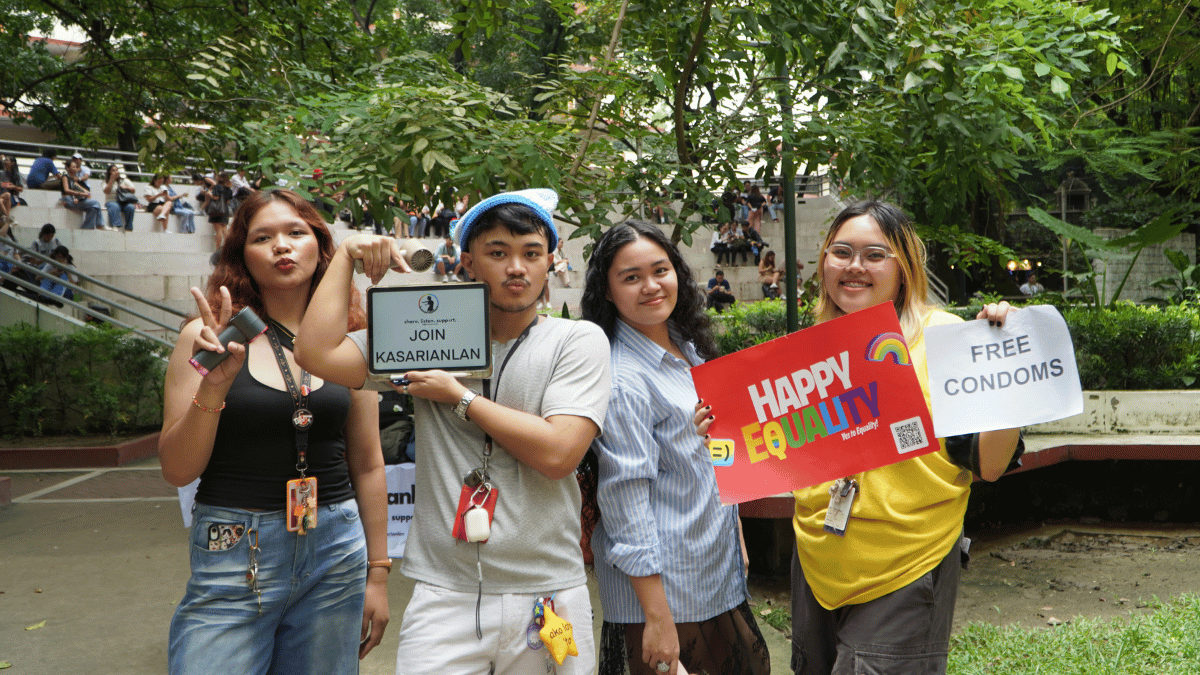
"College life is basically a new beginning for the students—a fresh start," says A Nadres, FEU SAGA's Vice President for External Affairs. For PUP Kasarianlan president Rianne Dacanay, that fresh start is also a choice: college is the first time you actually get to pick your people. "Our founders wanted to create a space where the queers and straight allies come together to have fun and do advocacy," Rianne says. "The safe space in the organization is very powerful, and we never police anyone on their SOGIESC."
PUP Kasarianlan alumna—and now a member of Cosmo Vibe Tribe—Bie Revalde has always considered the organization her safe space on campus. She joined in Senior High School, where it empowered her to challenge restrictive student policies, including strict haircut and dress codes. One incident even led to her graduation photos being withheld after she posed with a self-sewn Pride flag and took creative inspiration from queer icon Lady Gaga.
As a young queer student, Bie simply wanted the freedom to express herself. PUP Kasarianlan, she says, "became a manifestation of that dream and hope, making me think that it is actually possible. They helped me grow my leadership skills beyond the conventions of student leadership as we led the 'Leave Our Hair Alone' campaign, which allowed several trans students to graduate without their hair cut off."
Maybe that's what separates college from everything before it. High school teaches you to fit into existing categories. College is where you find out you're allowed to make your own. As A puts it, surviving college isn't just about the books—"it's about meeting people from different [backgrounds] and communities that [resonate] with them."
You're Growing Through Community
The funny thing about being a student is that some of the most important things you'll learn about yourself probably won't appear in a syllabus.
College is often the first place people encounter real conversations about gender, sexuality, healthcare, identity, and community—and the first time they can ask questions they've carried for years without feeling embarrassed. Both FEU SAGA and PUP Kasarianlan have built their cultures around that idea: curiosity isn't a weakness, it's a starting point.
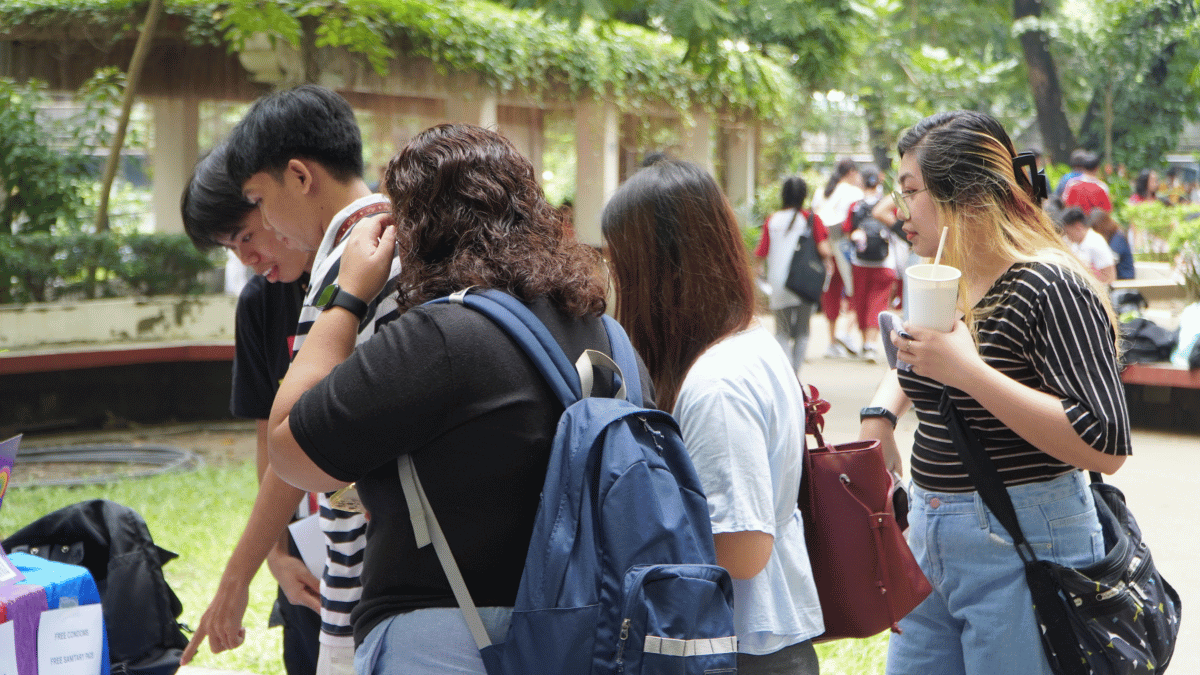
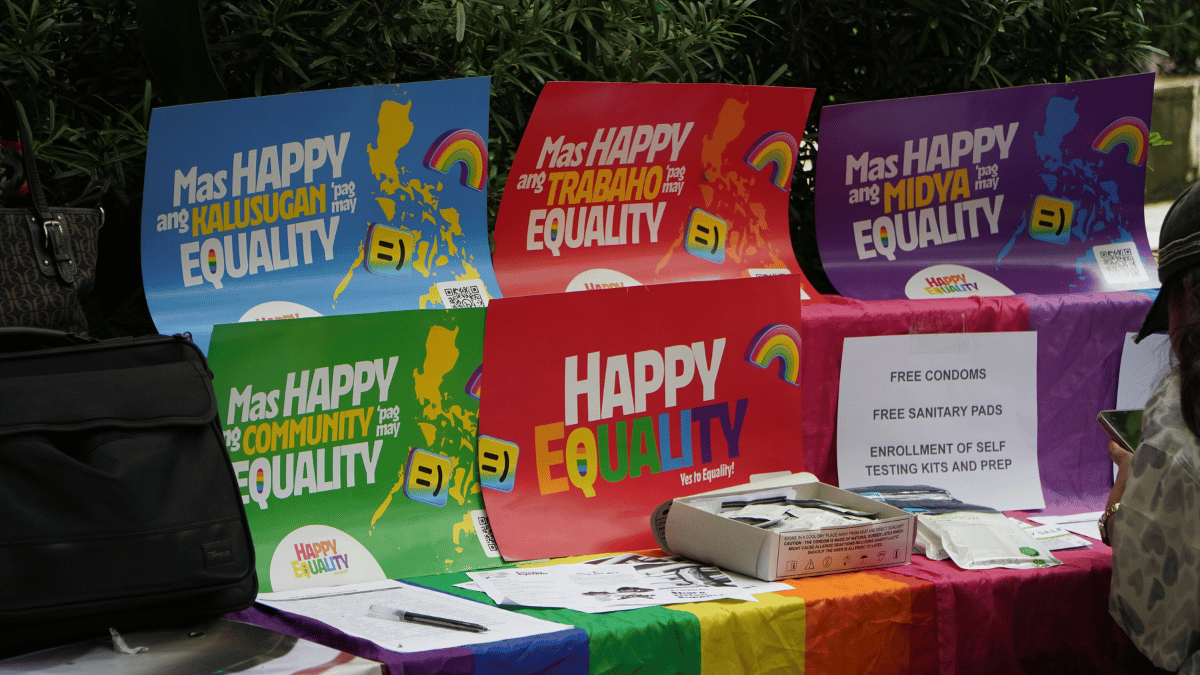
At FEU SAGA, that starts with SOGIE 101 discussions during General Assemblies—less lecture, more open conversation about gender, sexuality, and lived experience. "We believe education is the foundation of understanding and inclusivity," A says. The org also partners with LoveYourself Inc. for free HIV awareness seminars and voluntary testing on campus.
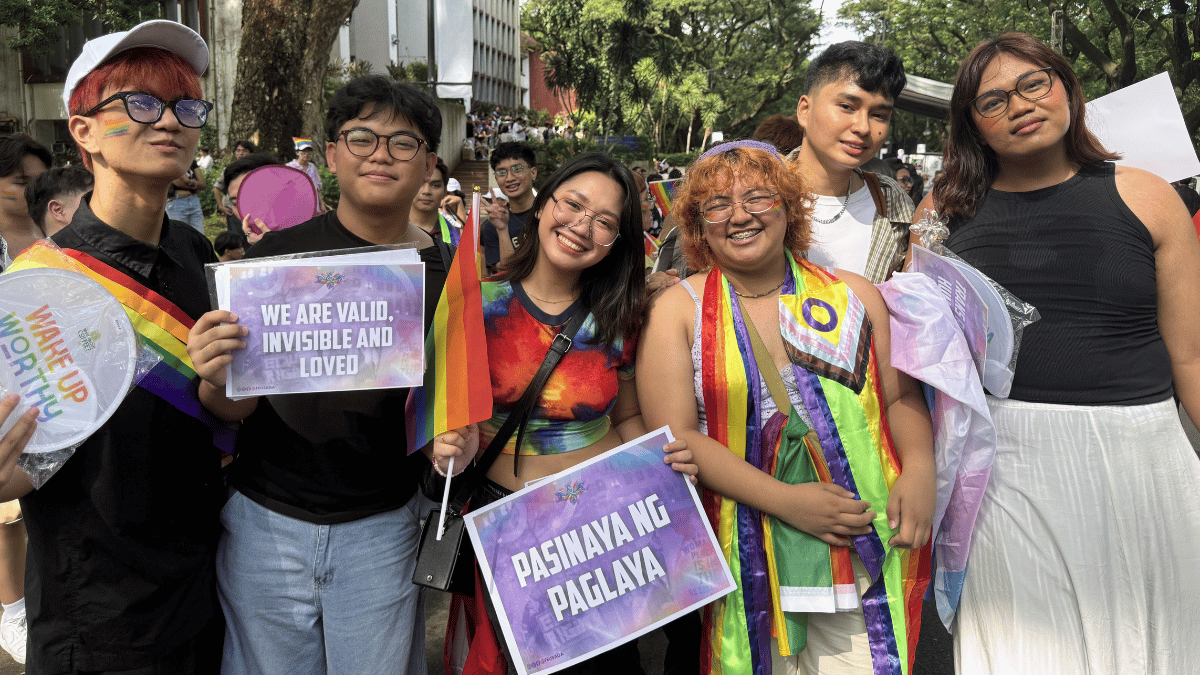
That learning spills outside the meeting room, too. During FEU Pride, campus walkways transform into a celebration of visibility, with student performances, advocacy booths, interactive activities, and homegrown drag artists sharing the stage before cheering crowds. The org also joins larger events such as this year's LOVELAB4N Pride Festival in UP Diliman, where hundreds of thousands of participants packed the Academic Oval with handmade placards and rainbow flags—now Southeast Asia's largest Pride gathering.
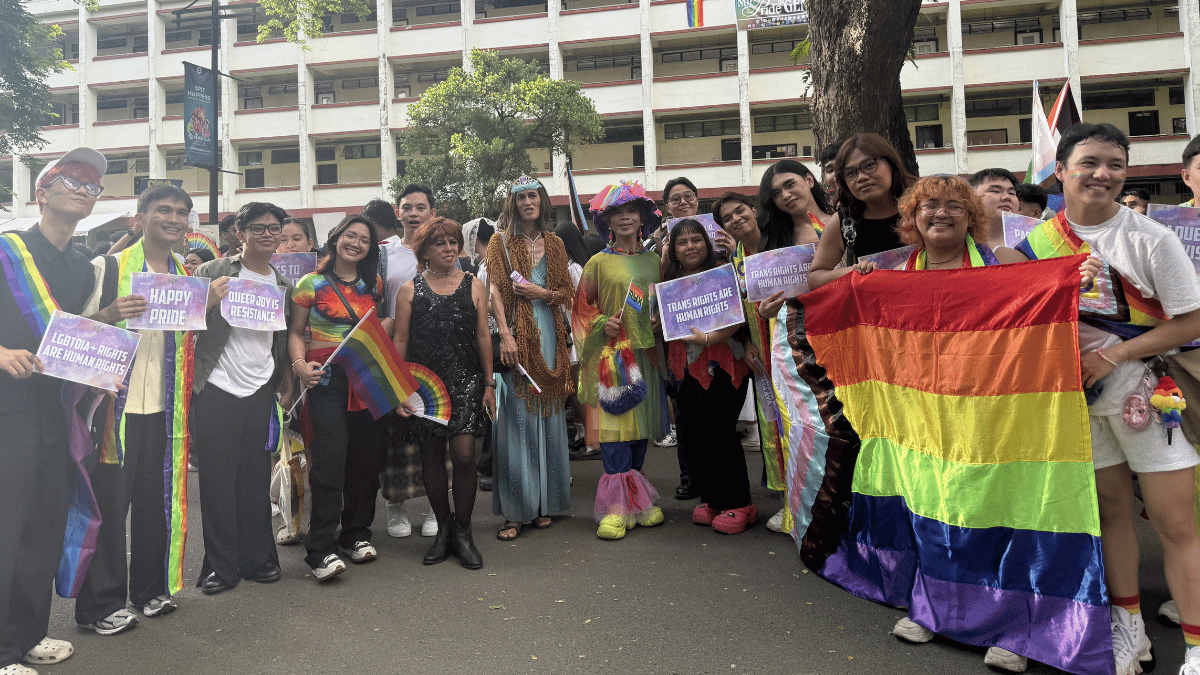
PUP Kasarianlan takes a similar approach, starting from the assumption that everyone walks in with different experiences and vocabulary. "I was identifying as genderqueer who [was] still navigating through identity when I joined them, and later on identified as nonbinary after learning more about SOGIESC," Bie says. "It was on my transition to freshman year in college that I knew I am indeed a trans woman."
New members go through discussions on SOGIESC, feminism, HIV and AIDS, and gender-affirming care before officially joining—and more recently, the org has trained students as peer educators in sexual and reproductive health. "We understand that the students entering the organization are confused, and we assume they are here to know more about their SOGIESC," Rianne says.
Creativity gets just as much weight. At this month's Rainbow Exhibit in the University Library Lobby, paintings, illustrations, and mixed-media pieces turned the space into a gallery of queer expression—stopping students mid-walk to actually look.
Looking back, Bie says her community helped her become many things until today—from becoming PUP's first trans Student Council President, crowned as the youngest international trans pageant queen, to hosting this year's Pride Festival in June. "We are not the messiahs of our personal [or] collective struggle—whenever we're ready, we have a community backing us."
This Is Where The Fun Begins
Of course, anyone who's ever joined a student org knows that the real magic rarely happens during the formal meetings. It happens during rehearsals, group chats, after-parties, themed events, inside jokes, and the lore that somehow develops whenever a group of passionate young people spend enough time together.
Advocacy may be serious work, but student life has always thrived on playfulness, creativity, and collective imagination.
Ask either org which pop culture icon represents them, and the answer comes instantly. For FEU SAGA, it's Lady Gaga. "Her advocacy, artistry, and support for the LGBTQIA+ community continues to inspire the people in our community," A says—pointing to "Abracadabra" as the unofficial anthem, a song about "transformation, self-empowerment, resilience, and embracing one's authentic self."

PUP Kasarianlan found its answer in Chappell Roan. "We have always played and sang along to Chappell's 'HOT TO GO!' and 'Pink Pony Club' in our events!" Rianne shared. And as Bie remembers, being a member made it feel "euphoric being queer." That same playful spirit runs through the org's own traditions, too—recent activities have drawn inspiration from Encantadia, with officers taking on fantasy-inspired titles. Rianne, for one, is affectionately called "Inang Reyna."
It's no coincidence both orgs landed on queer pop royalty. Gaga and Chappell haven't just been making bops—they make being loud, weird, and fully yourself look like the whole point. That's basically the mission statement, just with better choreography.
And After College, The Future Is Fearless
There's one thing FEU SAGA and PUP Kasarianlan both circle back to: this generation isn't just figuring things out as they go. They're showing up with intention.
"There is a growing understanding that identity is personal, diverse, and unique to each individual," A observes. "Students are also more intentional in finding communities where they can be their authentic selves, share their experiences, and connect with others who understand and support them."
Bie is one of many students who grew into themselves through campus organizations. "The foundations of my leadership was introduced through KASARIANLAN, and I will forever be grateful to be part of this organization since I entered the university we know today as one of the top universities that are cradles to activism."
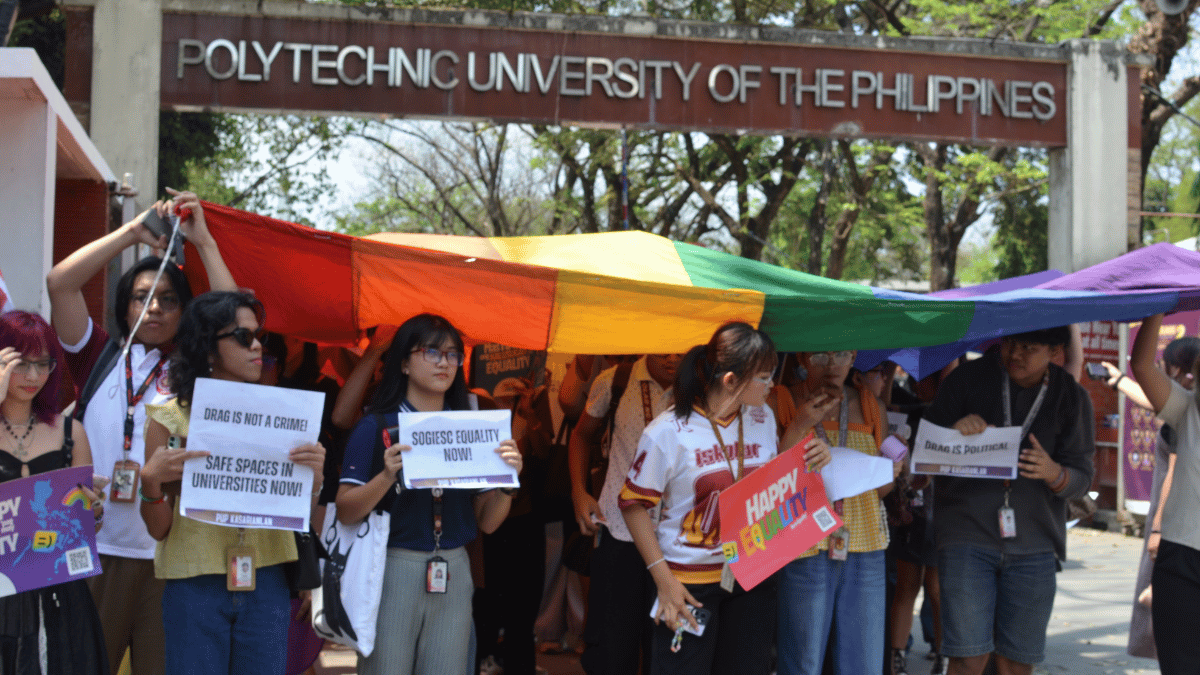
Rianne has noticed something similar—young people getting louder against what they call "DEMOS": discrimination, exploitation, marginalization, oppression, and subordination.
Somewhere between the lectures and the lore, that's what college actually teaches you: you walk in as one person and walk out as someone else entirely. The diploma's nice, but the real lesson is learning to ask the hard questions, find your people, and stand firmer in what you believe. College only lasts a few years—but the version of you it helps you find tends to stick around for life.
Why Bouldering Has College Students In A Tight Grip—And Where To Go For Your First Climb Near Campus
They're "sending projects" in more ways than one. 🪨
READ MORETrixia Policarpio is the Editorial Assistant of Cosmopolitan Philippines, a matcha lover who swears by café window seats as her perfect writing spot and collects little keepsakes for her junk journals.