UP Diliman Has An Anti-Sexual Harassment Office—Here's Exactly How You Can Reach Out And File A Case

Published on Apr 17, 2026
Universities are often called our second home—the place where we grow into ourselves and figure out who we are. But when that space feels unsafe, everything shifts.
In the Philippines, gender-based violence and sexual harassment remain real concerns. Around one in six Filipino women aged 15 to 49 have experienced physical, sexual, or emotional violence from an intimate partner.
As conversations around consent, sexuality, and gender expression become more open, the need for real protection becomes more urgent. That's exactly why UP Diliman established its Office of Anti-Sexual Harassment (OASH).
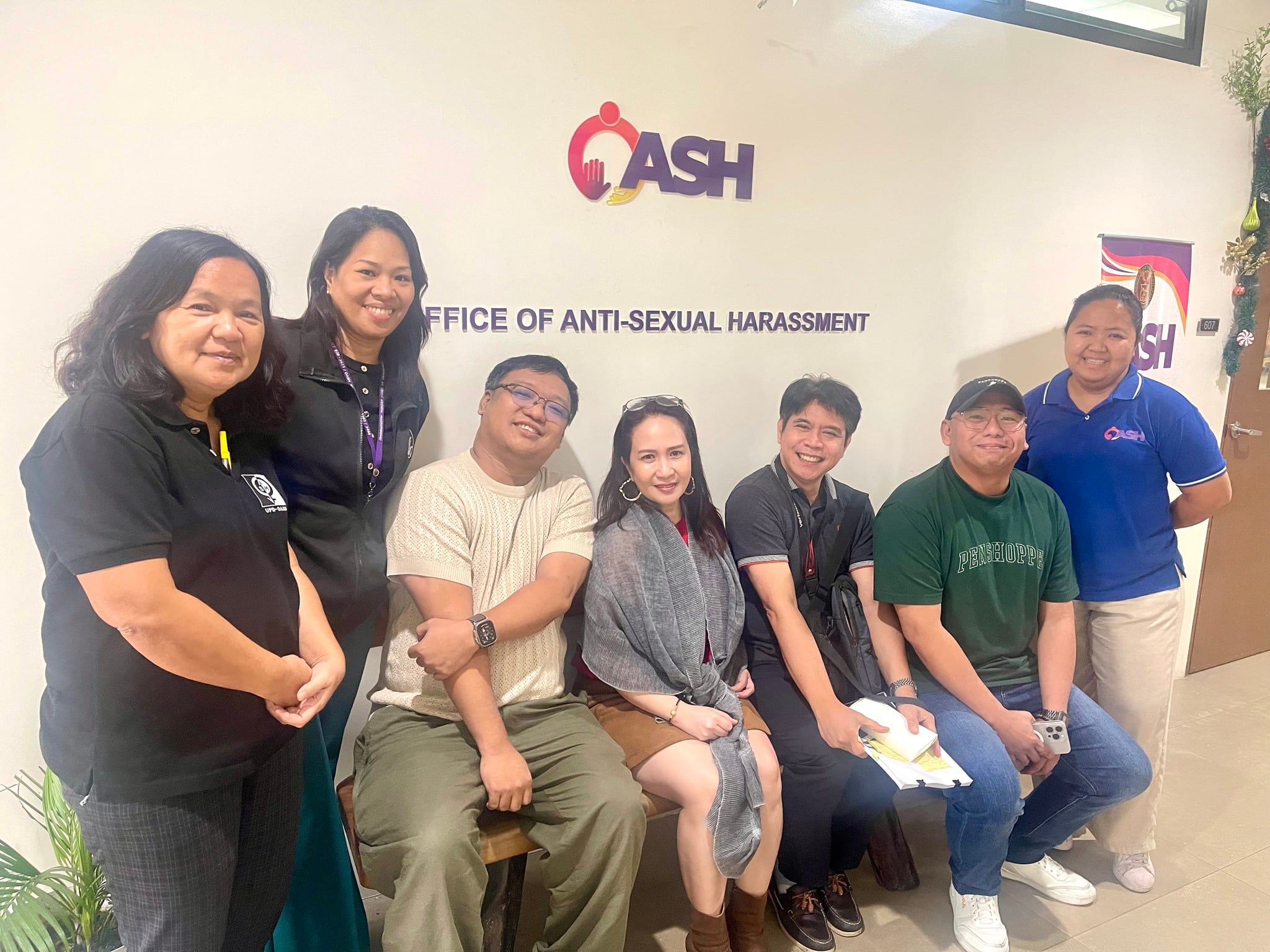
To understand how the office works, Cosmopolitan Philippines spoke with its coordinator, Dr. Teresa Paula De Luna. Before heading OASH, she served as a faculty representative under CODI, the university's Committee on Decorum and Investigation. For her, one message matters most: there is an office that can support you and a code that protects your rights.

Jasmine Curtis-Smith Speaks Out Against Lewd Remarks Toward Women—And Other Celebs Shared Their Thoughts, Too
The actress emphasizes respect as the bare minimum.
CONTINUE READINGWhat is UP Diliman's Office of Anti-Sexual Harassment (UPD OASH)?
In 2003, then-UP President Emerlinda Roman established UPD OASH, following Republic Act No. 7877, which required institutions to form a Committee on Decorum and Investigation (CODI) to handle sexual harassment complaints. UP went a step further by creating a dedicated office to strengthen reporting, support survivors, and make case handling within the university more structured.
Since then, OASH has evolved—and so has the number of reports. But as Dr. De Luna pointed out, that increase raises an important question: "Is it really because mas madaming harrasers or mas may madaming nagre-report?"
She reflected on whether students in earlier years were simply less aware, more hesitant, or held back by stigma. Today, three factors stand out in shaping the current landscape: culture, awareness, and technology.
"Harassment is not anymore experienced via the face-to-face, the physical," she said, noting how online spaces have also become sites of harm.
How do you know if something counts as sexual harassment?
Dr. De Luna breaks it down simply: sexual harassment is unwanted, unwelcomed, and uninvited.
If it checks those boxes—and is sexual in nature or rooted in gender hostility—it may fall under sexual harassment or gender-based violence. UP's Anti-Sexual Harassment (ASH) Code now also includes protections related to SOGIESC (sexual orientation, gender identity and expression, and sex characteristics), which broadens what the policy covers.
What makes things tricky is that not all harmful acts are loud or obvious. Light offenses such as leering, inappropriate jokes, or suggestive comments are often dismissed, even by those experiencing them. Some students report feeling conflicted, often coming to their office with sentiments like, "pero nakitawa rin ako pero parang uncomfortable rin ako."
"Ang tawag lang sa kaniya 'light', but the impact on people is not light," Dr. De Luna emphasized. She said that victim-survivors often feel confused because of the social pressure and how the behavior has long been normalized in society.
The same uncertainty can happen in friendships and relationships. Victim-survivors sometimes hesitate to report because they feel guilty, especially when the person involved is someone they care about. "That's why we also look into gaslighting…Mamaya na-gaslight ka lang, thinking that 'it's my fault,' lalo na pag people in a relationship."
Dr. De Luna shared that even men sometimes hesitate to report because of expectations that they can't be harassed. "Even males, meron din silang mga perspective na, dahil expectation [ay] lalaki ako, hindi ako maha-harass ever… That's a cultural, patriarchal thing."
At the end of the day, she grounds it in a simple check: ask yourself if it's something you genuinely consented to or were comfortable with from the start.
What to expect when you reach out to UPD OASH
You can report an incident.
Reporting doesn't automatically mean filing a case, and that distinction matters.
At OASH, the process begins with simply reaching out. From there, the office already guides possible next steps, along with psychosocial support. This support can come from volunteers and interns from UP's Department of Psychology, or through their partnerships like the express lane for counseling and psychiatric services at UP Philippine General Hospital, as well as UPD PsycServ.
Importantly, there's no pressure to immediately file a case. "Some people just want to report. So what I can say to them is take your time. If you want to file [a case] now, yes. Tomorrow, yes. A year after, yes." The office provides counseling, medical assistance if needed, and even connects students with external psychologists offering pro bono services.
Just keep in mind that victim-survivors have a four-year prescriptive period to decide whether to formally file.
To make access easier, reports can be made in person at their office on the 6th floor, Room 607-608, of the UP Diliman Student Union Building, or online through their official Facebook page and Messenger.
You can file a case.
Dr. De Luna wants students to clearly understand both the role and limits of OASH. The office can handle complaints involving anyone within the UP community—students, faculty, staff, organizations, and even workers on campus. For outsourced personnel like construction staff or janitors, OASH coordinates with their agencies while still staying involved.
If a victim-survivor decides to proceed, the process starts with a preliminary investigation, which usually takes about a month. It's often the toughest stage, since many are still processing what happened, so the office balances sensitivity with the need to gather and verify details.
From there, the case goes to the Office of the Chancellor, who decides if formal charges will be filed. A three-person hearing committee is then formed to review the case and recommend a decision—but the final call still rests with the Chancellor.
Penalties can be serious. Under UP's Anti Sexual Harassment Code, the highest sanctions include expulsion for students and dismissal for employees. Victim-survivors may also choose to file criminal cases separately, which can lead to imprisonment if proven guilty.
The process is designed to be both fair and thorough. As Dr. De Luna put it, "Kaya hinabaan yung process. Para mas ma-filter talaga."
You can go with an Alternative Dispute Resolution.
Not all cases have to go through the full formal route. After the preliminary investigation, victim-survivors may opt for Alternative Dispute Resolution (ADR), especially for light offenses, first-time incidents, or peer relationships.
"The victim-survivor can have a participation in the kind of justice that she wants to have," Dr. De Luna said. Here, the victim-survivor sets the conditions that define accountability for them. OASH reviews these conditions and relays them to the respondent for agreement. OASH then monitors the process to ensure the commitments are being fulfilled.
For some, this provides a sense of closure without the long wait tied to formal proceedings.
What are the other initiatives of UPD OASH?
Beyond handling cases, OASH is also focused on visibility and prevention. The office works closely with the UP Diliman Gender Office, the UP Center for Women's and Gender Studies, and the UP Office of Legal Aid to strengthen support systems for students.
At the same time, Dr. De Luna hopes the administration can move faster and be more responsive when it comes to students' concerns. Behind the scenes, the office is constantly finding ways to make the process easier—whether that's through research or benchmarking how other universities in the Philippines and abroad handle cases.
For Dr. De Luna, it all comes down to this: a campus where speaking up doesn't feel scary and support shows up right away.

5 Essential Laws Every Filipina Should Know To Protect Herself, According To A Lawyer
Because you don't have to keep quiet about it.
ALSO READTrixia Policarpio is the Editorial Assistant of Cosmopolitan Philippines, a matcha lover who swears by café window seats as her perfect writing spot and collects little keepsakes for her junk journals.