90s Kabaklaan Is For The Gaze Of Today
The pages changed. The reading between the lines never did.
Published on Jun 30, 2026
Ever heard the saying that we're everything we've ever loved? The books we read, the films we obsess over, the people we admire, the stories we carry with us—they all leave something behind. Piece by piece, they shape who we become. And among all the things we consume throughout our lives, there are always a few that stay with us longer than the rest.
For many people, that moment comes through a life-changing novel, a favorite artist, or a film that feels a little too personal. For Victor—the person behind the beloved online page 90s Kabaklaan—it began with the glossy pages of lifestyle magazines. Long before he started archiving queer nostalgia online, he was already finding pieces of himself in print. Between fashion spreads, celebrity features, and portraits of people living boldly and unapologetically, he was slowly imagining the person he wanted to become.
Looking back, Victor traces much of that curiosity to the women who raised him. His mother, a Chemistry teacher, filled their home with scholarly magazines, food publications, and lifestyle glossies. His aunt, an engineer working in Manila, would drive home to the province with stacks of magazines in her car—including Cosmopolitan Philippines. "She would go to our province—because I lived in the province—and dala-dala niya lang yung magazines do'n, and I would take a peek and I would slowly read."
Victor, who was only 13 at that time, caught a glimpse of a life that felt exciting, independent, and possible. "My aunt, I would say, as cliché [as it is], is more Cosmopolitan. She worked in the city; she had this nice job. She's in corporate."
And somewhere between those pages and the women who brought them into his life, Victor slowly discovered himself.
A Very Cosmopolitan Life
Victor describes the lives he saw in Cosmopolitan and the lifestyle his aunt embodied as a "very fantasy life." Growing up in the province, Victor never saw those pages as a comparison. He saw them as a horizon. There was so much more waiting for him beyond what he already knew. "The way I view it, it's something that you aspire to be when you grow up," he says.
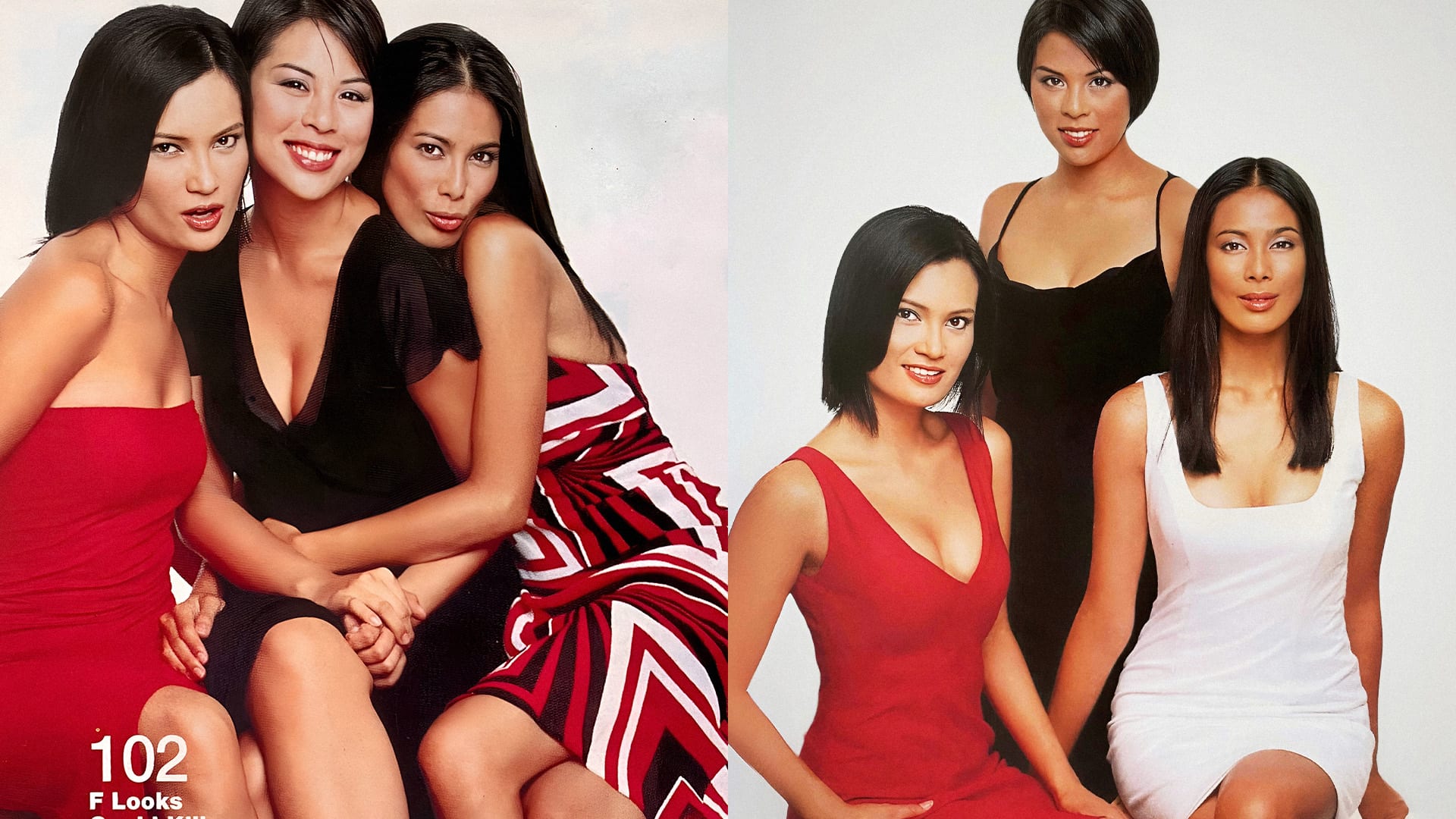
When asked about his favorite Cosmopolitan issue, Victor immediately brings up the September 2001 cover featuring the F Girls—Cher Calvin, Angel Aquino, and Daphne Oseña. For him, these women became some of the earliest examples of what a successful and exciting life could look like. He remembers watching their lifestyle show and seeing a world that felt completely new at the time.
"It's very fantasy. They would review these bars, they would review these really nice dresses and have this really fabulous lifestyle that as a gay man growing up, [it's] something to aspire [to]."
In hindsight, Victor realizes that what fascinated him wasn't simply the glamorous events. It was the independence. "I think it's something that inspired everyone to own [their] life," he says. "And if you want to own this lifestyle, you really have to work." In many ways, he sees that ambition as something deeply familiar to queer people—the desire to create a life for yourself on your own terms.
Victor also grew up during the height of Sex and the City. And more than the material things, he was drawn to how freely the women moved through the world. They were expressive, adventurous, spontaneous, and completely themselves. For him, the F Girls became a local version of that same energy.
That influence still shows up in the way he presents himself today. "I love colors and you can see it sa feed ng 90s Kabaklaan," he says. "I love it when I post something colorful."
It's an instinct that happens to be right on time—the maximalist palettes and playful silhouettes of the '90s and Y2K era have found a second life with Gen Z, who have fully embraced the aesthetic on runways, thrift stores, and TikTok alike. It's validation of something Victor always knew: that era never really went out of style.
He remains particularly fond of late-'90s and Y2K fashion because of how playful it feels while still looking polished. More importantly, he remembers a time when style felt less about brands and more about self-expression. "It's being very true to yourself," he says. "It's very, you know, dress as you please, and you can take risks, and it's just so fun."
For Victor, that may be the biggest lesson those magazines left behind. Long before he fully understood who he was becoming, they taught him to just be "very extra" and "very expressive."
The 'Gay Gaze'
For a magazine that was written primarily for women, Cosmopolitan ended up becoming important in Victor's own queer journey.
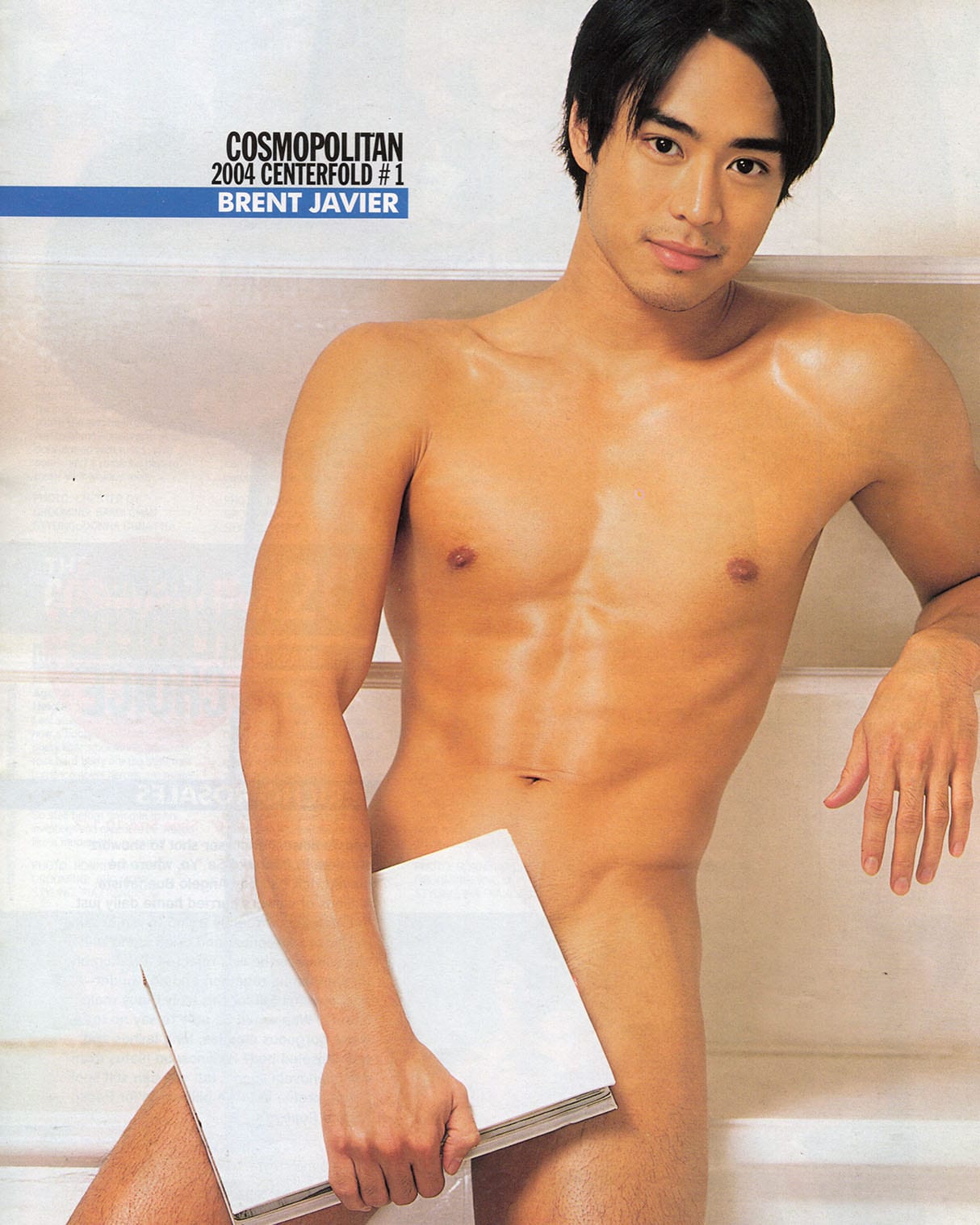
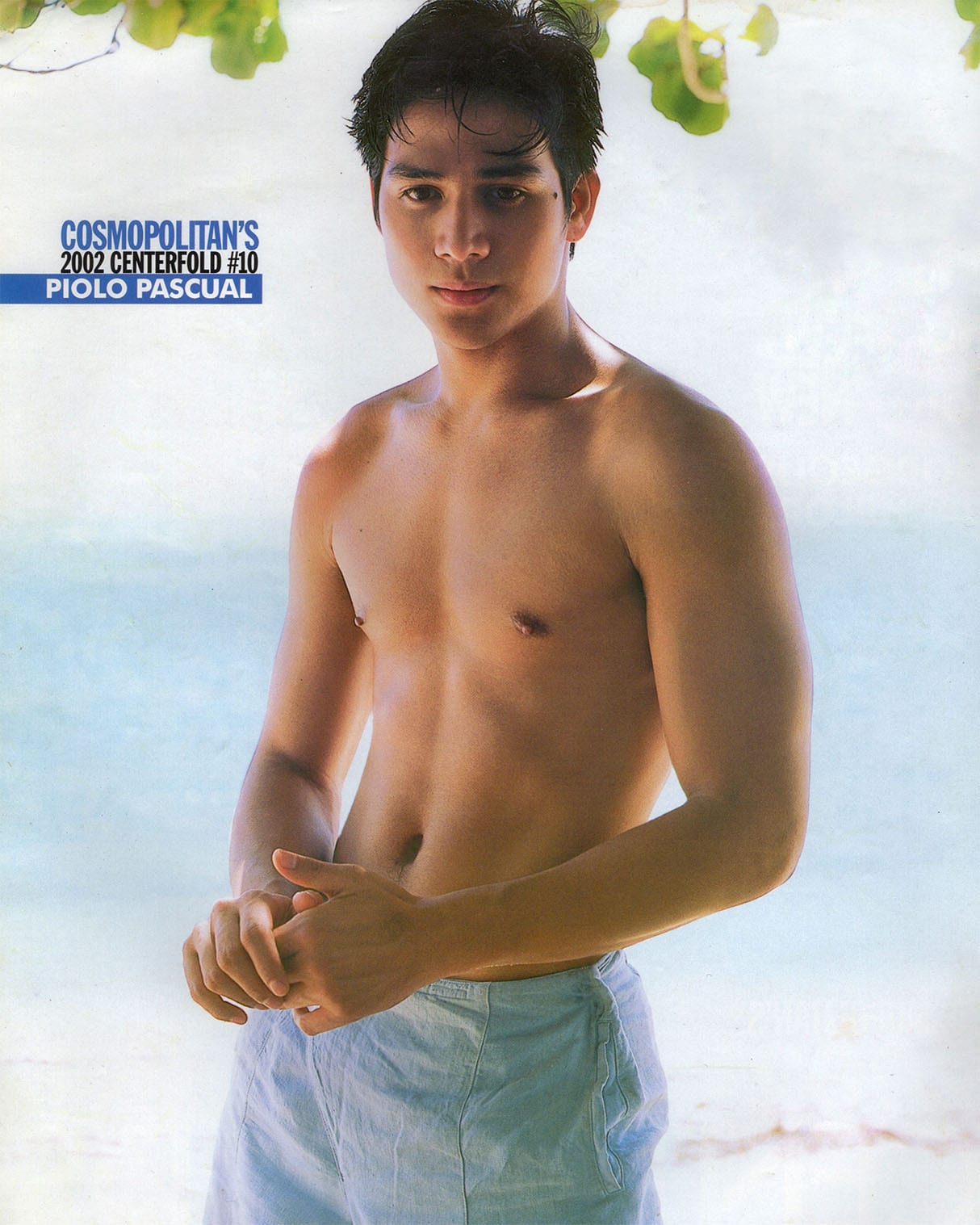
One of the sections he remembers most fondly is the notorious Cosmo Bachelors feature. Laughing, he recalls names like Christian Vasquez, Marc Nelson, and John Hall. But beyond celebrity crushes, those pages offered something much bigger: the permission to experience what he calls the "gay gaze."
In his words, it was simply about being free to admire someone's beauty and physicality without shame. "There [was] no other LGBT or queer publication in the 2000s, and I think the closest to that was Cosmo."
Those pages became a small but meaningful space where Victor could safely explore attraction and desire—where having crushes felt like a normal teenage experience.
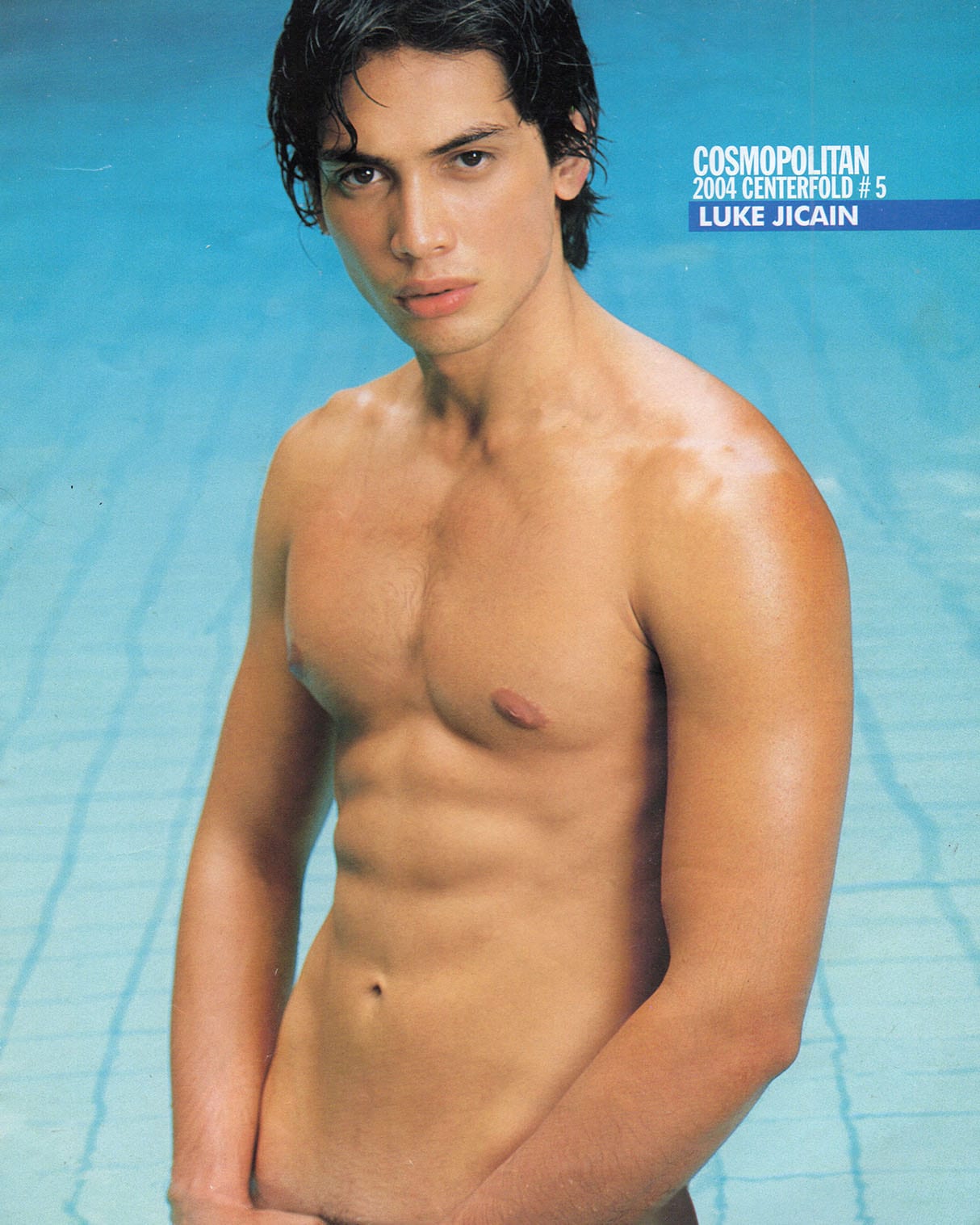
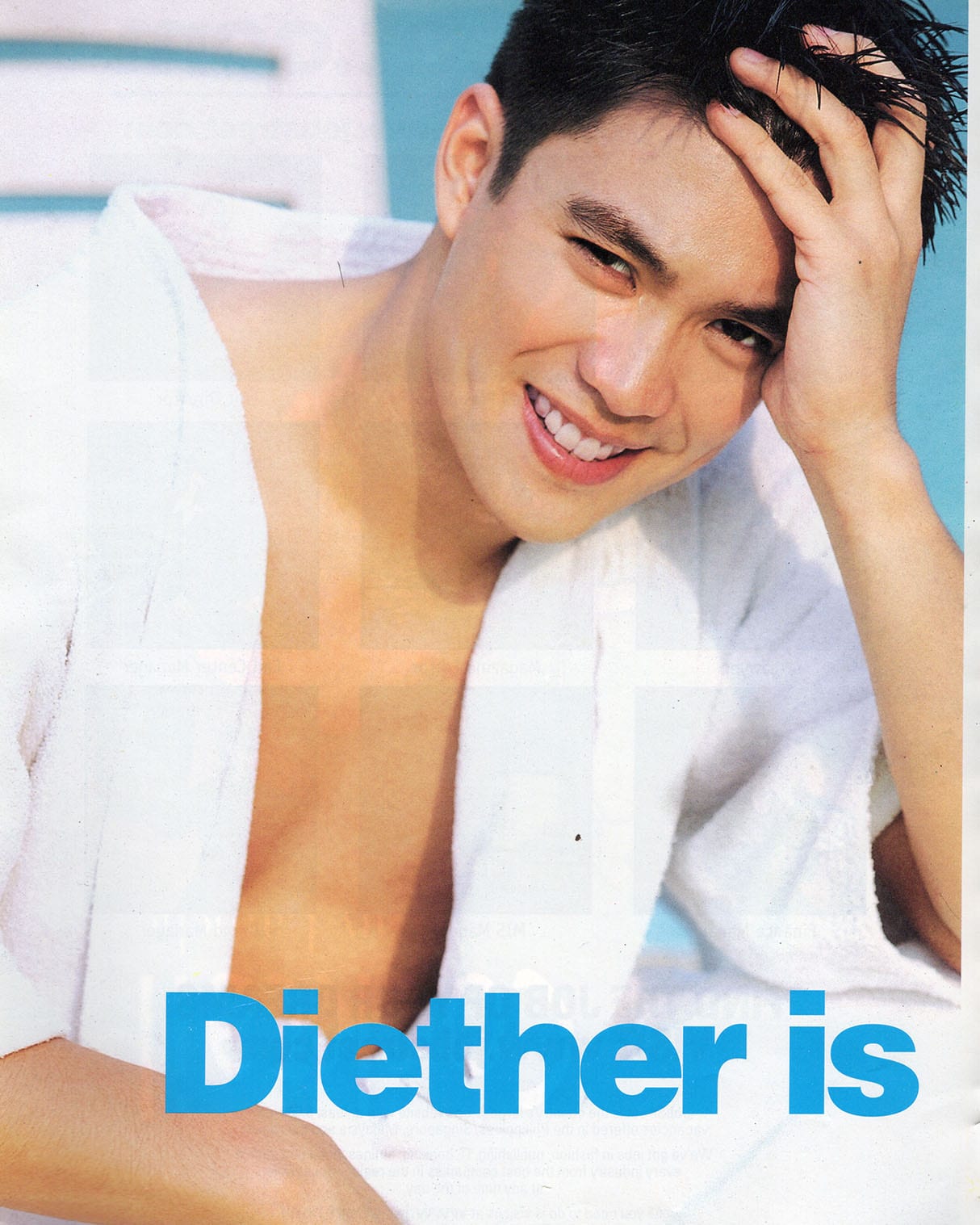
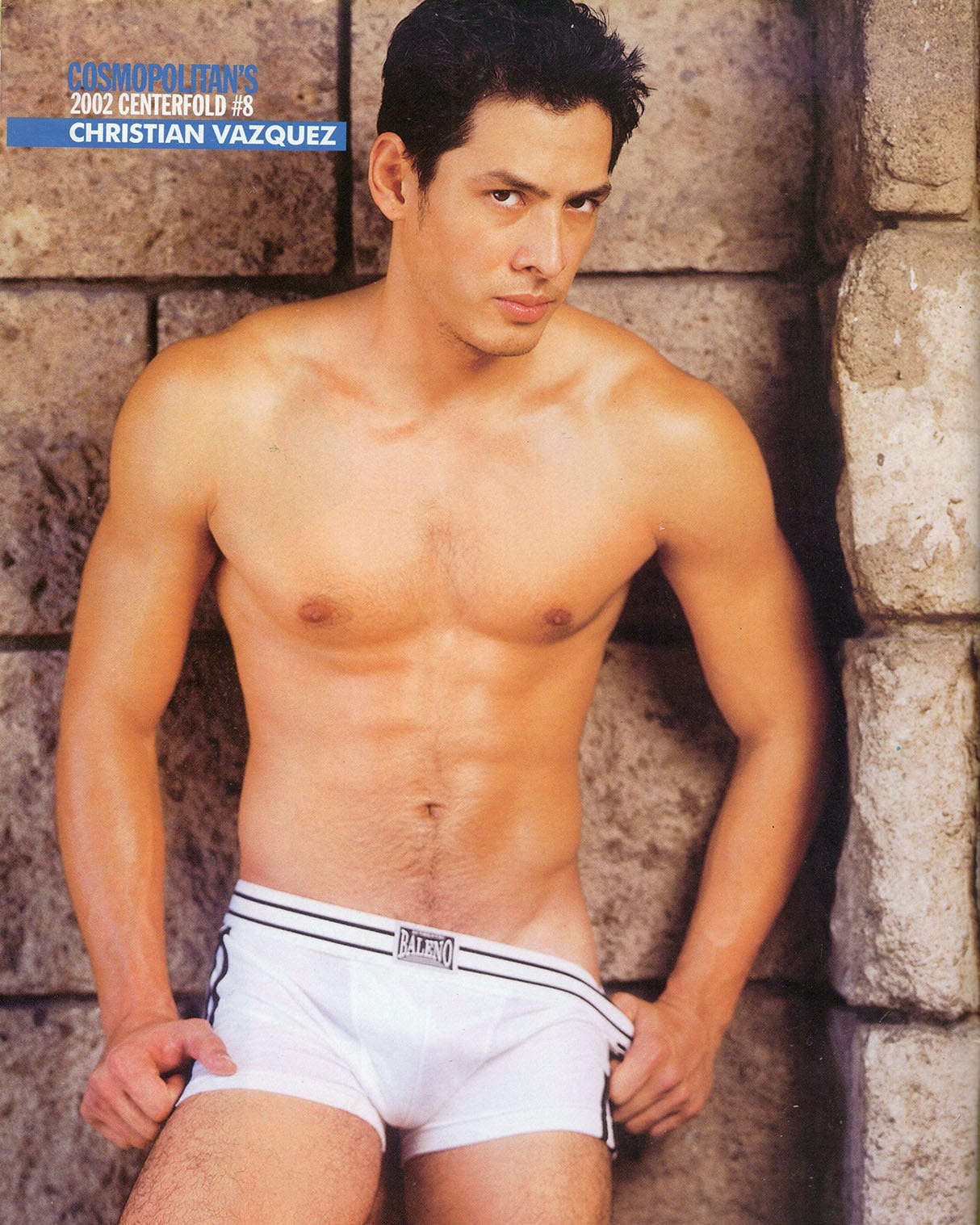
photos to expand
Beyond that, he also found guidance in the magazine's stories. Even before social media became everyone's source of advice, Cosmopolitan was already talking about love, relationships, sex, and adulthood in ways that felt open and honest.
"There's a reason why Elle Woods calls it 'The Bible' in Legally Blonde because it really contains everything," Victor says. "You read Cosmopolitan and you're never the same."
Many of the topics felt taboo at the time, but Victor remembers how thoughtfully they were written. "It's so empowering," he says. "And the way Cosmopolitan wrote it for our generation was so revolutionary. And it was eye-opening." What he found in those pages wasn't just information—it was language for experiences that many young people, queer or otherwise, were trying to understand for the first time.
The Archive Of His Becoming
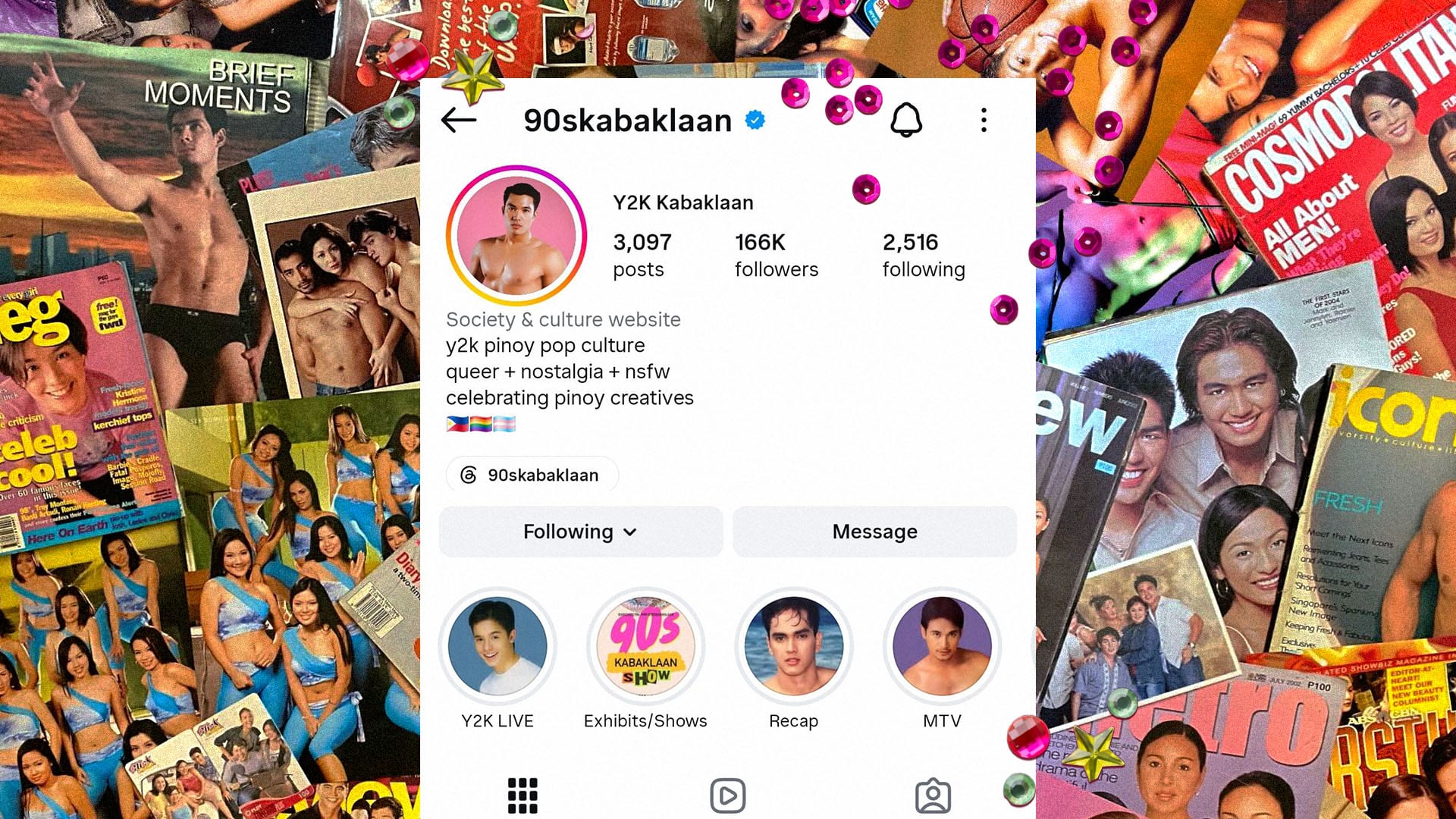
Today, Victor continues that same process of discovery through 90s Kabaklaan. Launched during the pandemic, the Instagram account has since grown into one of the most beloved nostalgia pages online with over 166,000 followers as of writing. Over time, however, it came to mean something more personal to him: a way of preserving the archives of his becoming.
"Sa'kin, yun ang iniisip ko—sayang kung hindi ko ma-post," he says. "Sayang yung chance not to have a digital archive for this piece of pop culture."
While 90s Kabaklaan is filled with familiar faces—celebrities, models, cover stars, and television personalities—Victor is quick to credit the people who shaped those stories behind the scenes. He speaks with particular admiration for magazine writers and editors, including Cosmopolitan Philippines' founding editor-in-chief, Myrza Sison.
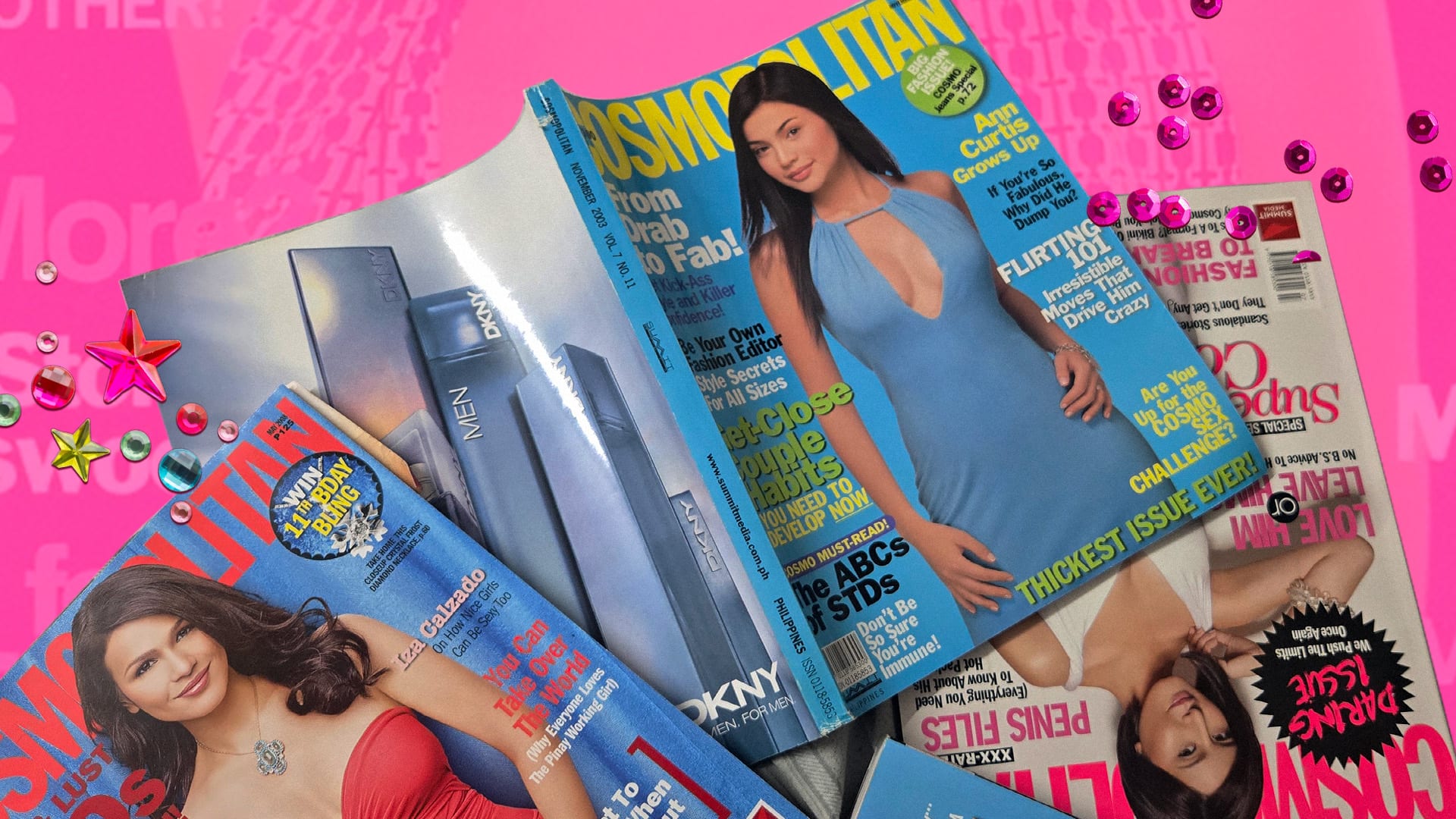
"The editors before, they were like the original influencers," he says. "They were tastemakers. They were the gatekeepers of pop culture, of aesthetic, of style, of substance."
In many ways, Victor's continuous work on 90s Kabaklaan is part of that same lineage. Through the page, he continues documenting the culture that shaped him while introducing it to a generation that never got to experience it firsthand.
The Next Chapter Of 90s Kabaklaan
Although Victor grew up surrounded by magazines, he has fully embraced the digital world—and he knows exactly why it works. "Trends come and go," he says. "We always recycle the same things, and we all love nostalgia."
But he also knows nostalgia alone isn't enough. Years of collecting magazines and following pop culture have given him a strong instinct for what people connect with, and the page works because it pairs memory with humor, commentary, and reflection.
It's also why he isn't afraid to engage with social and political issues when necessary. Beyond posting scanned magazine pages, he also archives old film clips, commercials, and TV segments that he repurposes into political memes and satire. In recent months, he's used vintage pop culture references to comment on issues ranging from Senator Ronald "Bato" dela Rosa's reported attempts to evade arrest to fuel price hikes and anti-queer rhetoric. For Victor, humor can help people process and discuss serious issues in a more accessible way.
Much like the glossies that influenced him growing up, his now-digital stack can also be a place where people learn, reflect, and exchange ideas. "It has to be something impactful. It has to be inclusive, and it has to be inviting." He adds, "Inviting in a way na there's trust when it comes to comment exchange."
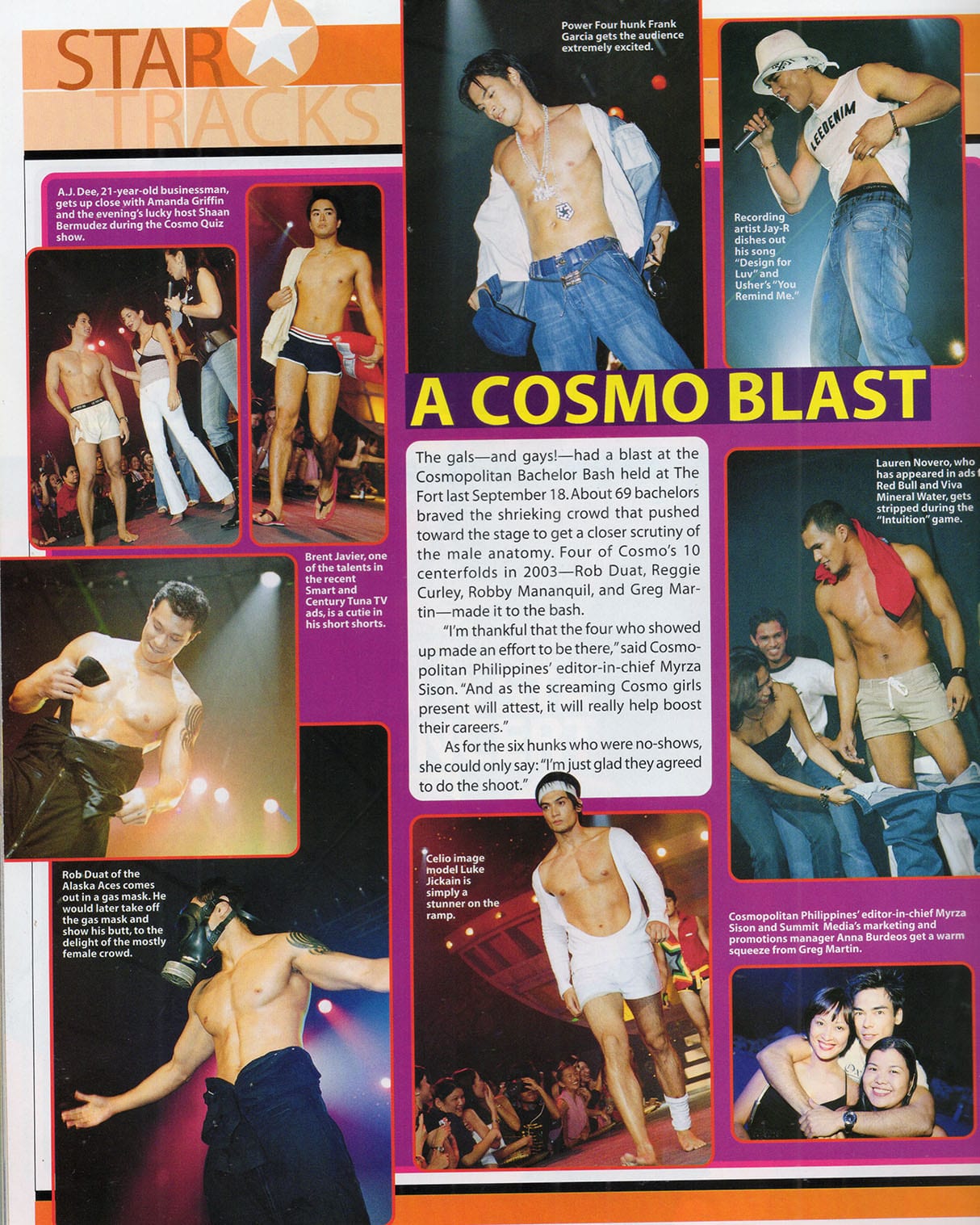
Even on posts featuring old Cosmopolitan Philippines centerfolds and other provocative throwback content, the comments rarely descend into objectification. Instead, followers reminisce about old crushes, debate their favorite models and celebrities, and share personal memories.
In a happy coincidence, this Pride Month also marks the fifth anniversary of 90s Kabaklaan. What began as a pandemic passion project has now grown into a thriving online community, meaningful collaborations, and even paved the way for Victor's first physical exhibition at Archivo 1984 in 2024.
After years of building his collection, Victor is preparing for a new chapter. He's moving beyond the '90s and diving deeper into the 2000s—the Y2K years and everything that followed, spanning all the way to 2009. (On Instagram, his account's profile name now reads Y2K Kabaklaan.) It's a fitting evolution for a page built on nostalgia.
But perhaps what's most meaningful about 90s Kabaklaan isn't just what it preserves—it's what it awakens. The same way a stack of Cosmos once gave a gay kid in the province the language to understand himself, his digital archive is doing that now for a new generation of queer Filipinos scrolling through their feeds.
We've gone from flipping to scrolling through pages, but the gaze—and the people behind it—have never been more their own.

Executive Editor: Ida Aldana
Art Director: Ica Del Mundo
Story: Trixia Policarpio
Producer: Trixia Policarpio
Social Media: Aina Lizarondo
Trixia Policarpio is the Editorial Assistant of Cosmopolitan Philippines, a matcha lover who swears by café window seats as her perfect writing spot and collects little keepsakes for her junk journals.