Travel
The ASEAN Region Might Be Getting A Schengen-Style Visa—Here's What You Need To Know
Published on May 28, 2025
Imagine jetting off from Bangkok to Hanoi, then dipping down to Manila or cruising across to Kuala Lumpur—all on a single visa, especially useful for non-ASEAN (Association of Southeast Asian Nations) tourists who typically need individual visas for each country.
The idea of a unified visa system for Southeast Asia, akin to the European Union’s Schengen visa, has been making headlines and stirring discussions across the region. At the heart of the conversation is a question that affects millions of travelers and the economies of 10 ASEAN countries: Is a Schengen-style visa in Southeast Asia feasible, and what would it mean for tourism, mobility, and security?
ADVERTISEMENT
What Is an ASEAN Visa?
A proposed ASEAN visa would allow tourists to travel freely within participating ASEAN countries using a single visa. Much like the Schengen visa in Europe or the GCC visa in the Middle East, this system would enable travelers to cross borders without having to secure new paperwork each time. The initiative has gained attention with former Thai Prime Minister Srettha Thavisin, who envisioned a shared visa zone among the mainland ASEAN countries.
In its most basic form, this regional visa would grant access to multiple nations for a set period, possibly 90 days, streamlining entry procedures and enhancing tourism across borders. The overarching goal? A boost in regional tourism, economic cooperation, and easier travel for international visitors.
ADVERTISEMENT
What Authorities and Analysts Say About the Proposed ASEAN Visa
The Philippines' Department of Tourism (DOT) has voiced strong support for the initiative. Speaking at the SKIFT Asia Forum 2025 in Bangkok, Tourism Secretary Christina Garcia Frasco said that the unified visa aligns with ASEAN’s tourism goals and tagline: "A destination for every dream."
“The ASEAN visa certainly is part of that dream,” Secretary Frasco said, advocating for a collective approach to highlight the region's rich cultural heritage, natural beauty, and renowned hospitality. According to the DOT, such collaboration would benefit all ASEAN nations. Secretary Frasco emphasized, “Competition is always very healthy, but collaboration is healthier.”
She cited the Philippines’ collaboration with Thailand—especially the “Two Countries, One Destination” campaign—as a model for regional tourism partnerships. Secretary Frasco also highlighted the Philippines' appeal to ASEAN tourists, underscoring its unique cultural blend and warm, inclusive tourism experience.
But not everyone is on board.
According to the East Asia Forum, the idea may be too ambitious to implement. Concerns abound over visa overstays, illegal employment, and national security. A Schengen-style ASEAN visa would require shared data systems, harmonized visa issuance protocols, and synchronized security standards—a tall order for a region known more for non-binding consensus than deep regulatory integration.
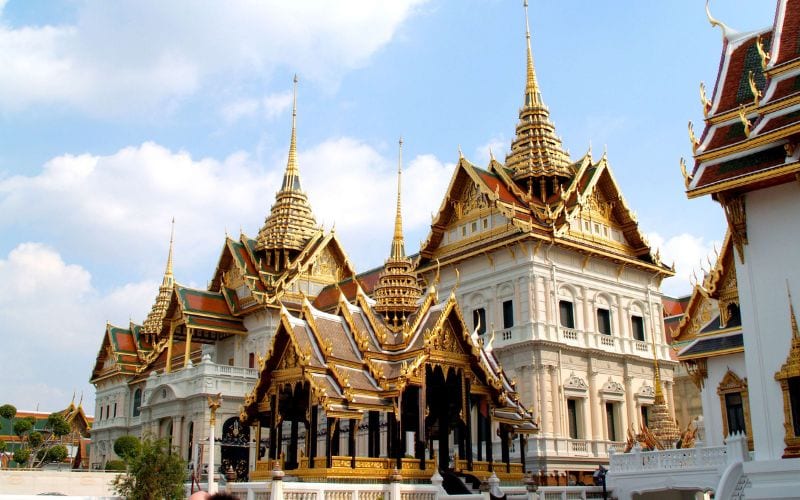
Click to Enlarge
Wat Phra Kaew in Bangkok, Thailand. Photo: Canva
Thailand's plan aims to revive tourism to pre-pandemic levels, with targets of reaching 80 million tourists by 2027. However, logistical challenges loom. Bangkok's Suvarnabhumi Airport is already over capacity, and infrastructure upgrades lag behind.
Former Philippine Immigration chief and now Cagayan de Oro Representative Rufus Rodriguez raised stark warnings about national security. According to local outlets like GMA News, the representative fears the unified visa could be exploited by Chinese nationals entering the country under false pretenses, including espionage or illicit business operations. “This will be more dangerous to our national security than our present visa issuance process,” he said.
Despite these challenges, the proposal has gained traction. According to Fragomen, a global immigration law firm, the idea is still in its infancy and will require multi-lateral negotiation. Visa-free entry policies across ASEAN nations vary widely, and there is no current consensus on aligning restrictions or travel purposes. For instance, while Thailand and Vietnam are opening up to more nationalities, countries like Myanmar maintain stricter protocols.
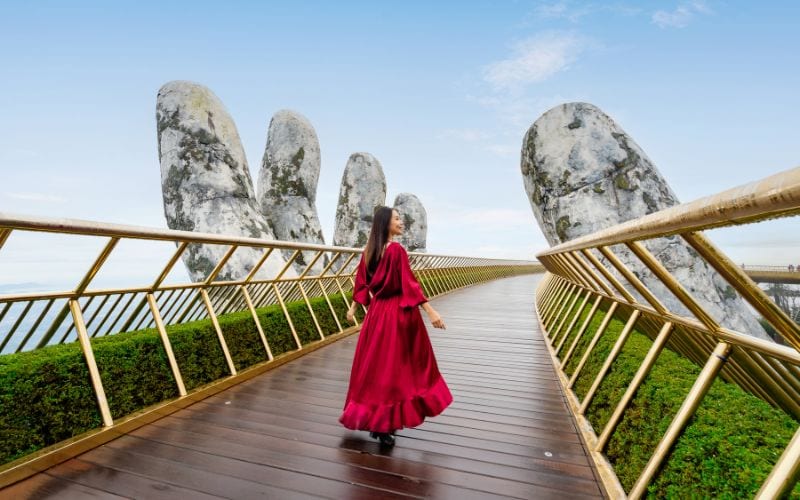
Click to Enlarge
PHOTO: Golden Bridge in Bana hills, Danang Vietnam. Photo: Canva
Security aside, even the administrative logistics are complex. Differing languages, data privacy policies, and bureaucratic capacity gaps could slow implementation. As East Asia Forum notes, ASEAN multilateralism depends heavily on national bureaucracies for follow-through. Without deep buy-in and oversight, the risk of patchy enforcement could undermine the entire project.
Still, the vision of a seamless Southeast Asian adventure is compelling—one visa, multiple countries, and countless experiences. As ASEAN leaders continue discussions, travelers and tourism stakeholders alike are watching closely. Whether this idea becomes a game-changing reality or remains a diplomatic dream will depend on how effectively the region can turn this aspiration into action.
***
This article originally appeared on Preview.ph. Minor edits have been made by the Cosmo.ph editors.