Cha Ocampo Is The Women Of Influence 2026 Sustainability Steward
She's making waves for marine life and community action.
Published on Mar 12, 2026
We're all familiar with that saying, "It's not that deep." But for Cha Ocampo, it is deep. And if you've ever spoken with her like Cosmo did one Saturday morning—or caught her in her element underwater—you'll understand why.
She's a digital creator, freediver, and scuba enthusiast who seems to spend more time in the ocean than most of us spend scrolling online. But look closer, and you'll see someone who approaches life, nature, and advocacy with intentional depth and curiosity.
Growing up around the Philippines' waters and landscapes, Cha moved through city life before realizing her real connection was to the ocean. Getting scuba certified—and eventually becoming a dive master in just two years—opened the door to seeing marine ecosystems up close and understanding why protecting them matters so much.
That question drives every dive, every expedition, and every project Cha takes on, including her current initiative, InDepth Expeditions. Through guided trips in Coron, Siargao, and Bohol, she invites people to experience the ocean more deeply while learning from local communities and the conservation practices that protect these fragile ecosystems.
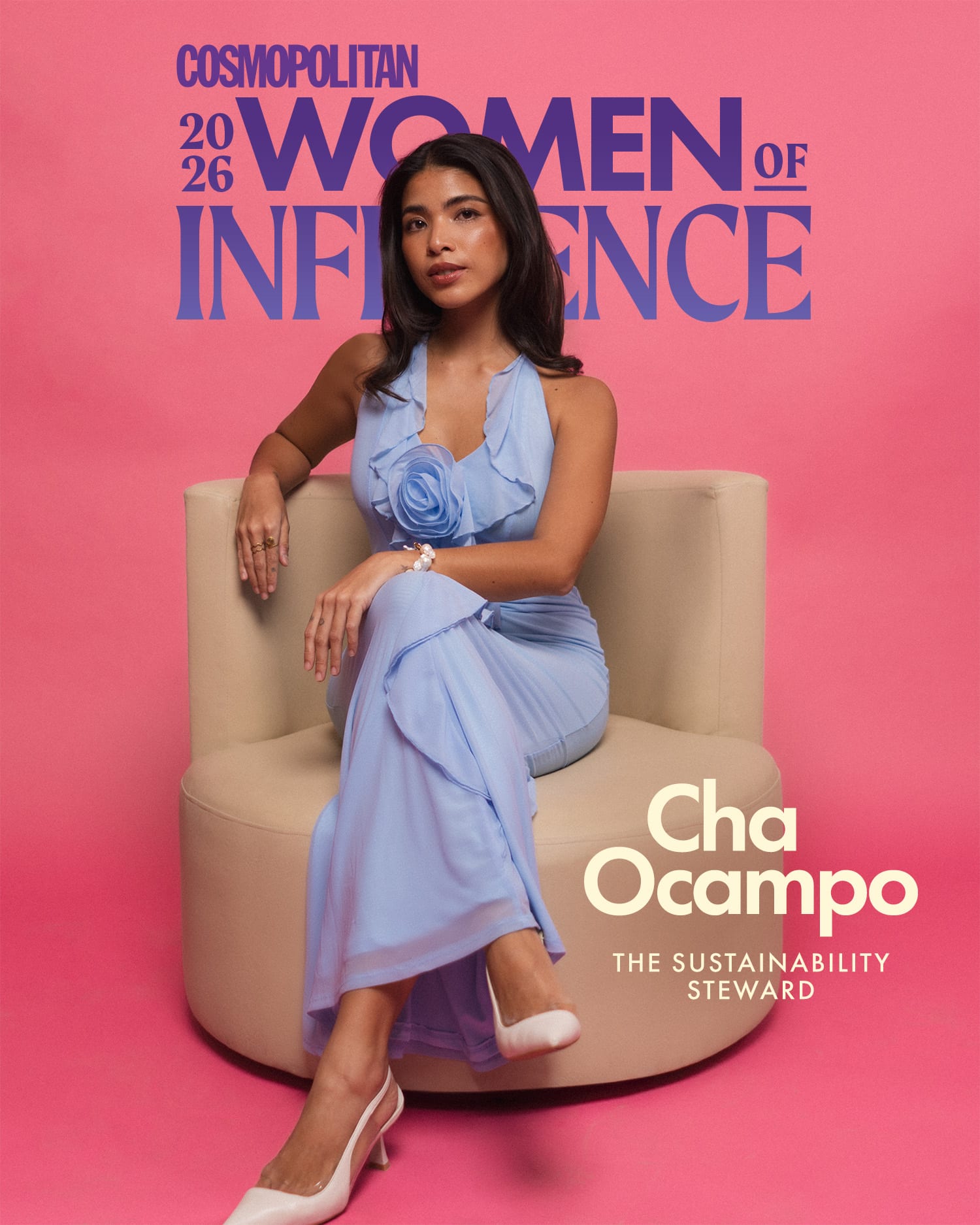
"I'm very happy because now a lot of people are so into freediving. May it be just an 'aura dive' or ganda-gandahan lang, but at least they still get to experience what it's like being underwater, and it sparks up curiosity in a way. They're still enjoying it. They're still seeing it," she says about the increased interest in diving. "These are very simple ways to mitigate what's happening with our environment here in the Philippines because we have such a beautiful country with natural beauty."
Whether mentoring young women, exploring underwater worlds, or championing sustainable practices, Cha's message is clear: meaningful change requires looking deeper, acting consciously, and embracing individuality—both in ourselves and in the planet we share.
When did you first realize your calling as an ocean advocate?
Cha: Oh, I can tell this story so many times. [laughs] When I was young, my dad would bring me to a pool or the nearest beach in Batangas, and I was just so comfortable with water. Even when I was showering, my dad would put me in a batcha with soap and let me bathe by myself. I was also very outdoorsy growing up.
Eventually, I was introduced to freediving. At first, it felt like a weird way of diving because you don't have a tank—you just hold your breath underwater like a marine mammal.
I went to a school called Seazoned in Coron by myself and stayed for a few weeks just to finish the course, then got certified by 2019. That's when it all opened up for me—this new kind of passion for the sea, because you really get to know more about it when you're actually connected with it.
Was there an experience that really drove home the urgency of conservation for you?
Cha: Some of the dives I've done really drove home the urgency of conservation. For example, diving in Palawan, you'd see colorful, lively corals full of fish—but when you see the skeletons of those same corals, they're bleached and white. I wouldn't say [bleaching] is the main issue in the Philippines, but global warming is making it worse. I've also witnessed oil spills—like during a cleanup in Tingloy, Batangas, where we stepped into actual blobs of oil on the beach.
It bothers me when others just dismiss it or say, "Let's not spread it because baka mawalan ng business." If I can volunteer with any organization, I do—because if it's urgent and they need help, being there is the least we can do to give back to the gifts of nature.
How does the philosophy of "living deeply in all aspects" translate into your environmental work?
Cha: In freediving, you're pursuing depth din. It's one of the requirements, so there's that literal meaning. At the same time, all the things I do are rooted in depth—not just emotions, but the depth of everything.
A lot of people say they're "beach people" or "ocean people," but there's so much more to it. If you really go in depth, you start to realize, "If I really love this, maybe I could do a few things that could help it." It can start small, but that's what I want to influence people with—that there's so much depth in everything.
I feel like a lot of people nowadays need to get to know themselves better and really look deeper to figure out what they stand against, what they stand up for, and what they're truly passionate about. That's what I mean by living deeply in all aspects—I know I have a purpose, but I'm still always learning, and there's always something more beyond what you see.
How do you hope your work with InDepth Expeditions and your advocacy will shape the next generation to care for our planet?
Cha: Actually, the reason why I started this is that I really want to gather people. Even if it's just a group of friends saying, "Cha, we want you to bring us to Coron because this is what you've experienced and you've talked so much about it."
I believe there's always influence you can share. You can show them, "Okay, this is why I love Coron. This is why I want to protect this part of the Philippines." Maybe that can change the narrative in their minds that it's not just a destination trip.
That's what InDepth Expeditions is about. I want them to get to know more about the ocean, the wildlife, and especially the marine life in certain parts of the Philippines—not just in Palawan.
For example, in Coron, you still have the Tagbanua tribes protecting the lagoons and lakes that we've never even seen. The only ones open to the public are Kayangan and Barracuda Lake, but there are so many others protected by the tribe. They're so close to nature, and we shouldn't just set them aside because they're tribes, 'di ba? Learning from the locals is something I want to integrate into the expeditions I'm doing.
What are some simple, everyday habits you personally practice to live more sustainably?
Cha: First, always leave no trace. People sometimes leave trash behind that won't biodegrade. If you bring plastic or disposable items, take it back with you because you're responsible for what you bring. Second, use reef-safe sunscreen. It's a simple thing, but it's one step toward reducing certain harmful chemicals that can damage marine life. Third, always respect the locals, like with the Tagbanua tribe in Coron. They're closer to nature than we are, and we can learn from their ways. In disrespecting [the locals], you're also disrespecting nature somehow.
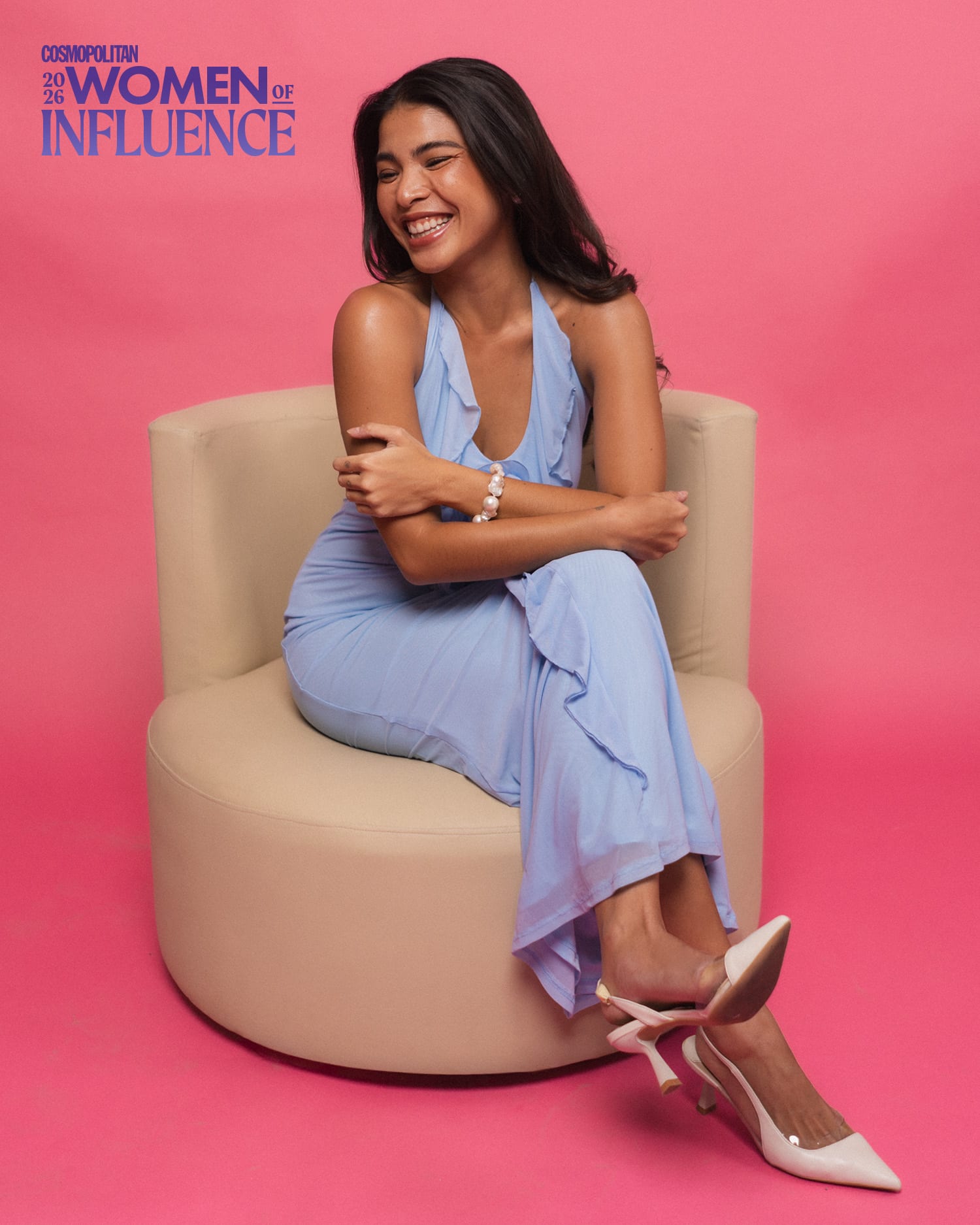
I also try my best to avoid plastic. There are organizations like Plastic Flamingo, who collect plastic products and turn them into furniture. They're very transparent about their work, and at least I know where the plastic goes instead of wondering if it's properly recycled.
I choose more sustainable and natural brands, especially local ones, over mass-produced supermarket products. I also thrift instead of always buying brand-new items, because throwing away clothes contributes to landfills. Those are just some simple ways, but I'm still a work in progress, and I want to stay open to learning from others.
How does connecting with the environment support personal growth and emotional well-being, especially for young women?
Cha: I'm not a doctor, but the more we expose ourselves to nature, the more natural it becomes for us. Pursuing nature also supports mental well-being, like there's that "blue theory" na when you see the color blue, it calms you.
I've noticed this in my own life and with my sisters—we all have mental health struggles, and spending time in nature for weeks helps more than medicine sometimes. We're so surrounded by concrete jungles that we don't have space to walk in a forest or park, so connecting with nature helps us tune into our more natural selves.
Advocacy work isn't always easy. What's been the most challenging part of your journey so far, and how have you overcome it?
Cha: It feels like you're always fighting for something to be made right, and it's very tiring. A lot of my friends who work passionately for similar advocacies feel alone because it's hard when you feel like you have to do everything and there's no help. For example, when a calamity like a typhoon happens, urgent needs aren't always prioritized by leaders, so it feels like the responsibility falls entirely on us.
Another challenge is the emotional side—sometimes you get that imposter syndrome, thinking, "I haven't done enough," especially as a woman. But the fact that we're taking action says a lot about what we've already achieved.
At the same time, I know I have to keep doing more, but I'm just an individual human being—I can't do everything at once. I also have to take care of myself. Mental health is so important because advocating passionately requires a strong and balanced headspace to keep doing it.
What does this year's Cosmo Women Of Influence theme, To Each Her Own, mean to you?
Cha: For me, it's about respecting diversity and each person's individuality. Nowadays, women often face stereotypes about how they "should" be, but each of us has our own minds, thoughts, and ways of being. Some women want to be mothers, some don't—that's their own choice. Some are bold and very "girl boss," while others, like me, are softer and more nurturing. That doesn't make anyone weak or less capable; it's just part of who we are. We should actually be more proud of it.
I think that's what To Each Her Own means. I love being who I am and being authentically myself. Fully embracing your individuality is what shapes who you are, and seeing others do the same is beautiful—to see them be confidently and authentically themselves.

Executive Editor: Ida Aldana
Art Director: Ica Del Mundo, assisted by Rebekah Vigilancia
Photographer: Lem Atienza, assisted by Yani Espiel, Yuan David, Nicole Evans, and Rafi Lopez
Hair and Makeup: Team Muriel Vega Perez
Interviewer: Cheska Santiago
Story: Justina Torres
Producer: Alyana Olivar
Video: Cherrie Julian and Jino Del Mundo, assisted by Alfred Locsin & George Tuliao
Social Media: Aina Lizarondo, assisted by Margaux Bataclan
Dr. Rica Cruz Is The Women Of Influence 2026 Taboo Breaker
She likes being on top—of making Filipinas feel good.
READ MOREJustina is the Editorial Assistant of Cosmopolitan Philippines. She's a Southie who's always collecting stickers, cafe receipts, and proof she’s living her best life (in the name of content, of course).