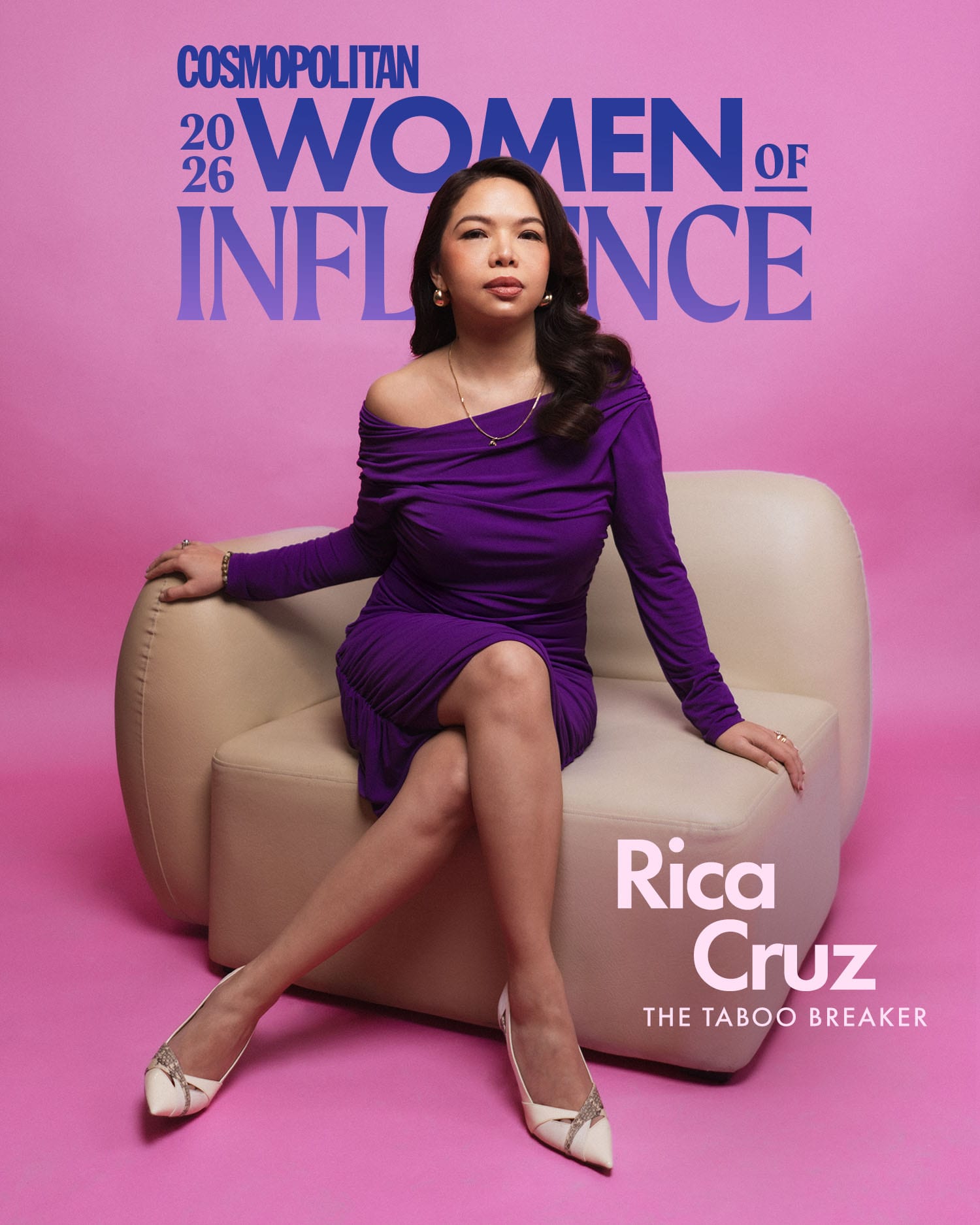
Dr. Rica Cruz Is The Women Of Influence 2026 Taboo Breaker
She likes being on top—of making Filipinas feel good.
Published on Mar 11, 2026
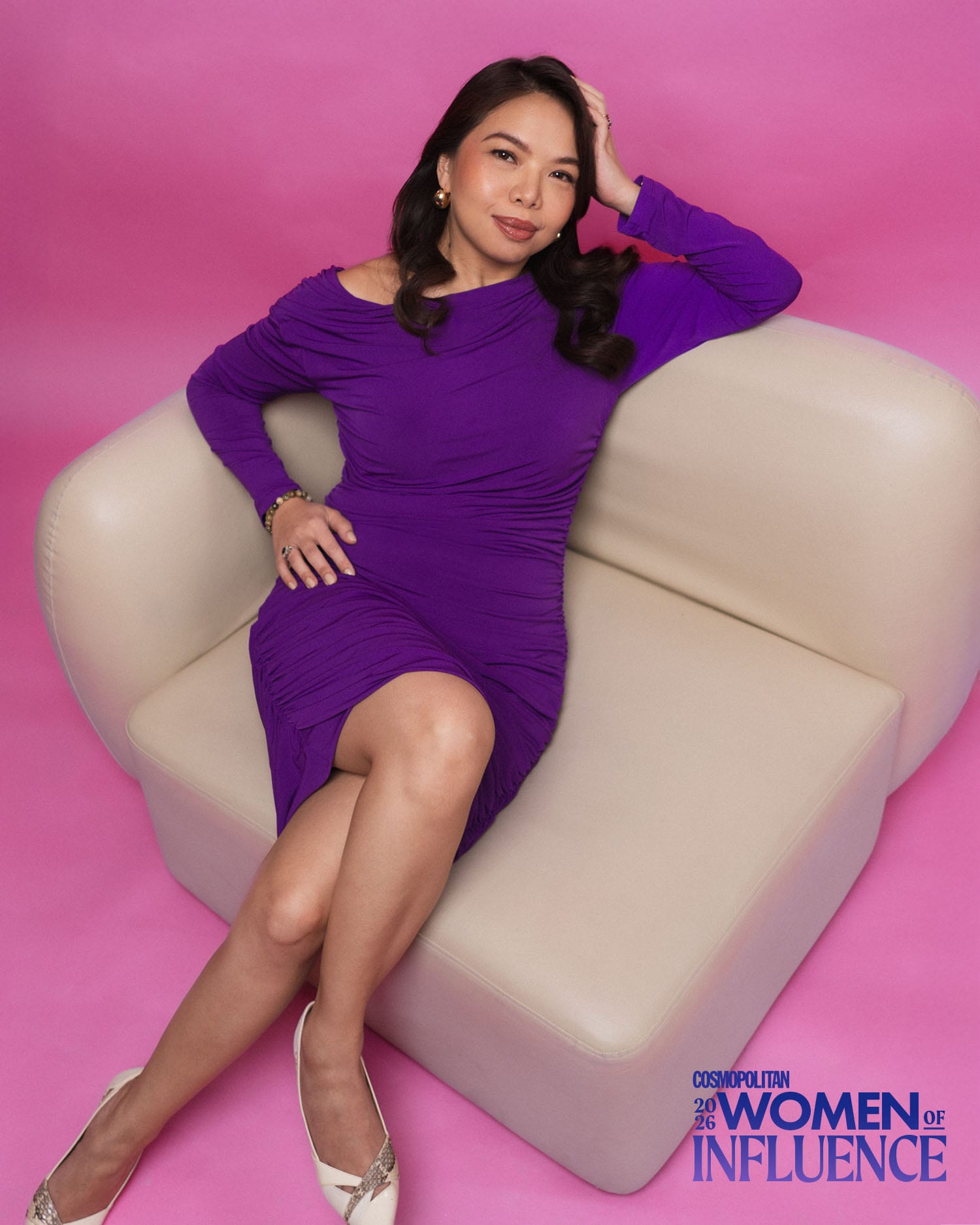
Dr. Rica Cruz has made it her life's work to talk about the things many Filipinos were taught to keep quiet.
But long before she became one of the country's most recognizable voices on sexual health, Dr. Rica was unlearning a belief she once held about herself. Growing up, she thought her value as a person was tied to her sexual experiences.
She had her first sexual encounter at a young age, and she carried the fear that people would see her and think, "That's such a shame. Matalino ka pa naman, but you've had all these experiences."
It wasn't until she began studying sex and eventually became a professional in the field that this belief began to shift.
Today, as a licensed psychologist and sex therapist, Dr. Rica has spent years helping people navigate conversations around pleasure, consent, intimacy, and bodily autonomy—topics that are still often talked about in hushed tones in the Philippines. Through her clinical practice, research, and digital platforms, she continues to create spaces where people can ask the questions they've been too afraid to say out loud and learn about their bodies without shame.
Beyond the therapy room, Dr. Rica is also the founder of Unprude, a platform designed to make sexual wellness education more accessible and stigma-free. Her work brings together science, education, and empowerment in everything she does. And she's deep into her mission: giving people the tools to feel confident, curious, and satisfied.
As Cosmopolitan Philippines Women of Influence 2026 awardee and this year's The Taboo Breaker, Dr. Rica is being recognized for the impact of her advocacy—challenging long-held stigmas and pushing for a future where Filipinas can openly understand, respect, and take ownership of their sexual health.
Through your clinical practice and research, you've seen how deeply sexual health affects people's lives. What's one experience that affirmed why this work matters so much?
Dr. Rica: Yesterday, I was just interviewing an adult content creator, and she's been doing sex work with other collaborators. There's no payment, but she would have sex with other people and they would film it. And when I asked her how she protects herself, she said that she gets tested every now and then, but then when I asked her if she uses a condom in those sexual encounters, she said no, because it ruins the feel on camera. Not for her pleasure, but on camera. And then I also asked her, "Are you not afraid to get sick or get pregnant? Are you [taking] contraceptives?" She said no, too. I asked her, "Do you have your HPV shots?" and she said, "What's HPV?"
I said, "You know what, let's get you tested, let's get you the education that you need. I'm not going to tell you to stop what you're doing, but you need to protect yourself and do this responsibly, because you have so much ahead of you."
I think when I heard that, it actually affirmed that we need to continue doing what we're doing. It's not a personal matter anymore. You want to be able to help other people to be responsible for themselves.
Sexual health is still kind of taboo in the Philippines. What's it been like carving out your space and speaking up in something most people shy away from?
Dr. Rica: Tiring, if you want an honest answer. But when you see something that is bigger than yourself and could help change a society where your daughters are growing, their friends are growing, and you have that chance to give them a better space and environment, so much so that sex will not be used against them, then you move forward. You push. You rest a little, 'cause it really is tiring, but you push.
I get backlash; I've been censored so many times. I've had a lot of attacks on my person, not just the advocacy, but my person. But I don't really care. I guess it's because I've gone through it since I was a child, so it doesn't matter to me anymore. You just keep pushing for what would help other people and what would help you create that society that you wanna see.
Is there a difference in how Gen Z Filipinas talk about sex and pleasure compared to other generations?
Dr. Rica: They're talking about it more openly, and I think that's a win. Gen Z women are more open to talking about sex, their experiences, and also being responsible for their own bodies. I think that's good; we'll take that win. But I wanna push more because there's still a lot of misconceptions and misunderstandings around sex and how you're supposed to treat it, which is with respect. The work isn't done yet.
What are some everyday practices or conversations you believe can help normalize sexual health, especially for women?
Dr. Rica: When I say sexual health, I'm not just talking about the absence of disease, but your overall disposition. A constant practice you should do is to be more in touch with your body. Touch your body, masturbate if you want, so that you'll be more confident in yourself. It doesn't even matter being confident in front of a partner; what's important is that you know who you are and what makes you feel good. And you can do that when you masturbate!
Before Unprude existed, what were you noticing in people's questions or experiences that eventually led you to build it?
Dr. Rica: Actually, ngayon, yung mga questions nila is more about relationships na. Before, it was more about sexual health, like "I cum quickly" or "I experience pain during sex, what should I do?" So it's more about the body. But now, it's more like, " What can I do so I can pleasure myself and my partner?" Deeper na yung questions ng mga tao in Unprude.
And that's the framework that we use. That's why I also take [their questions] as a good sign. The framework is that you really start with yourself, your body, and once you understand it, that's the only time that you get to explore your relationship with others, and then your relationship with the community around you.
When I saw that the questions are more about relationships now, it means that we've already at least tackled the problems on the surface level. Ibig sabihin, mayroon nang nakukuhaan ng information yung mga tao about their bodies, and that's good.
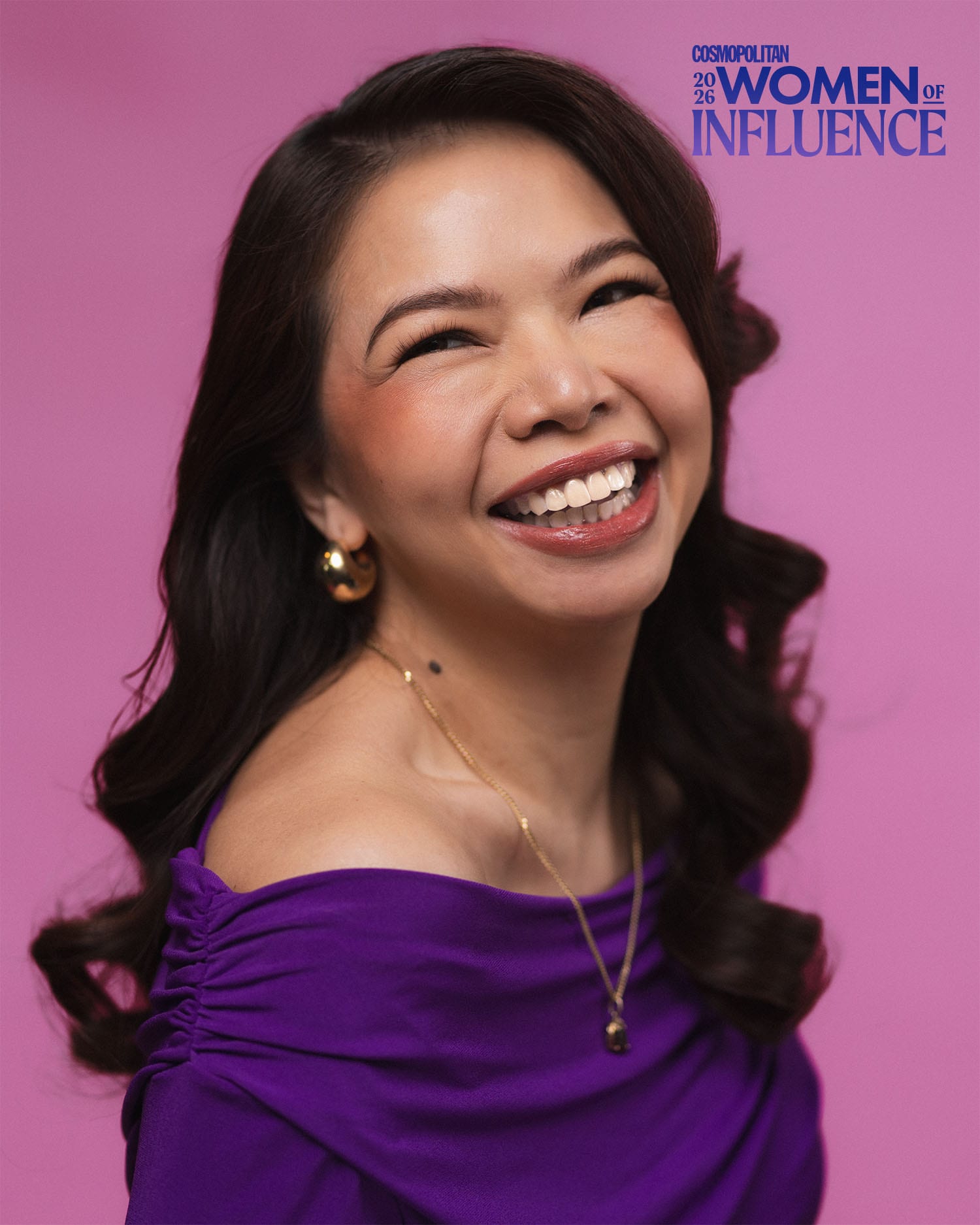
What does this year's Cosmo Women Of Influence theme, To Each Her Own, mean to you?
Dr. Rica: It means not letting anyone control you. "To Each Her Own" means you don't allow anyone to control who you are, and that you get to practice agency—your agency to do what you want to do and be who you want to be. Yes, it may be based on how you see yourself in relation to other people, but it is your decision. You own your decision, you own who you are, and you don't let anyone patrol you.

Executive Editor: Ida Aldana
Art Director: Ica Del Mundo
Photographer: Lem Atienza, assisted by Yani Espiel, Yuan David, Nicole Evans, and Rafi Lopez
Hair and Makeup: Team Muriel Vega Perez
Story: Cheska Santiago
Producer: Alyana Olivar
Video: Cherrie Julian and Jino Del Mundo, assisted by Alfred Locsin & George Tuliao
Social Media: Aina Lizarondo, assisted by Margaux Bataclan
Jessica De Mesa-Lim Is The Women Of Influence 2026 Wellness Guru
She turns checkups into holistic care women deserve.
READ HERECheska is Cosmo's Lifestyle Editor. She loves hoarding blushes, oversharing in drafts, and pretending impulse buys are "for work." Follow her on IG: @cheskasntg