Your Attention Span Is Officially Fried—But A Neurologist Says The Fix Is Already In Your Bag
Published on Jun 26, 2026
Scrolling has (sadly) become our default. Waiting for coffee? Scroll. Commuting home? Scroll. Five minutes before bed? Welp, you already know.
But as more people start embracing slower, more analog habits—from journaling to film cameras to ditching their phones for a "dumb phone"—there's one classic pastime making a comeback: reading an actual, physical book.
Sure, #booktok made reading cool again. But beyond giving us another fictional boyfriend to obsess over (🫣), picking up a novel could also be one of the healthiest things you do for your brain. According to experts, reading isn't just entertainment—it's basically a workout for your mind.
Reading does more for your brain than you realize
"Experts describe reading a book as a full-brain workout," says Dr. Cymbeline Perez-Santiago, neurologist and head of the Neurology Unit at Makati Medical Center.
Unlike watching videos or endlessly scrolling through social media, reading actually makes your brain work a little harder—in a good way. As you move through a story, you're imagining settings, picturing characters, interpreting emotions, and connecting details across chapters all at once.
And yes, there's science to back it up. A 2020 study found that better reading performance among children was linked to increased gray matter in areas of the brain tied to cognitive function. For older adults, regularly engaging the brain through reading may also help delay cognitive decline while supporting overall mental and physical health.
It gets even better: Reading could have long-term(!) benefits, too. A 12-year study that followed more than 3,000 adults found that people who read books had a 20 percent lower risk of mortality than those who didn't. Another study from Yale University found that reading for just 30 minutes a day was associated with an average lifespan increase of nearly two years.
Beyond the health perks, reading also helps expand your vocabulary and general knowledge—skills that come in handy everywhere from school and work to everyday conversations. According to Dr. Cymbeline, it can even boost your ability to empathize by helping you better understand other people's thoughts and emotions.
Why your brain responds differently to books than screens
If watching a movie and reading the novel it's based on don't feel the same, well—that's because they aren't.
Unlike videos, books don't show you what a character looks like or exactly how a scene unfolds. Instead, your brain has to build those images from words alone, filling in the details as you read. That extra mental effort is part of what makes reading such an active experience.
"Books, particularly long-form content, train us to focus and pay attention at a time when the digital world's fast-paced, short-form content has reduced our attention span," explains Dr. Cymbeline.
It's also why reading can feel like such a refreshing break from doomscrolling. While social media is designed to keep us jumping from one piece of content to the next, books reward us for slowing down, staying present, and following a single story from beginning to end.
Over time, that can strengthen your concentration, improve memory, sharpen analytical thinking, and even make you a better writer.
Even small reading habits can make a big difference
The irony? Even though many of us want to read more, we're doing it less.
According to the National Book Development Board's 2023 National Readership Survey, only 42 percent of Filipino adults had read a non-school book in the previous year—a significant drop from the 80 percent recorded in 2017.
The good news is you don't have to suddenly become someone who finishes a 500-page novel every weekend. Instead, Dr. Cymbeline recommends making reading feel less like another item on your to-do list and more like something you genuinely look forward to.
Keep a book in your bag, your car, or your desk drawer so you can squeeze in a few pages while waiting for an appointment or meeting a friend. If long novels feel intimidating, you can always start with short stories or slimmer books to slowly rebuild your attention span.
So the next time you instinctively reach for your phone during a spare moment, consider reaching for the book in your bag instead. Your TBR—and your brain—might thank you for it. 🙂↕️
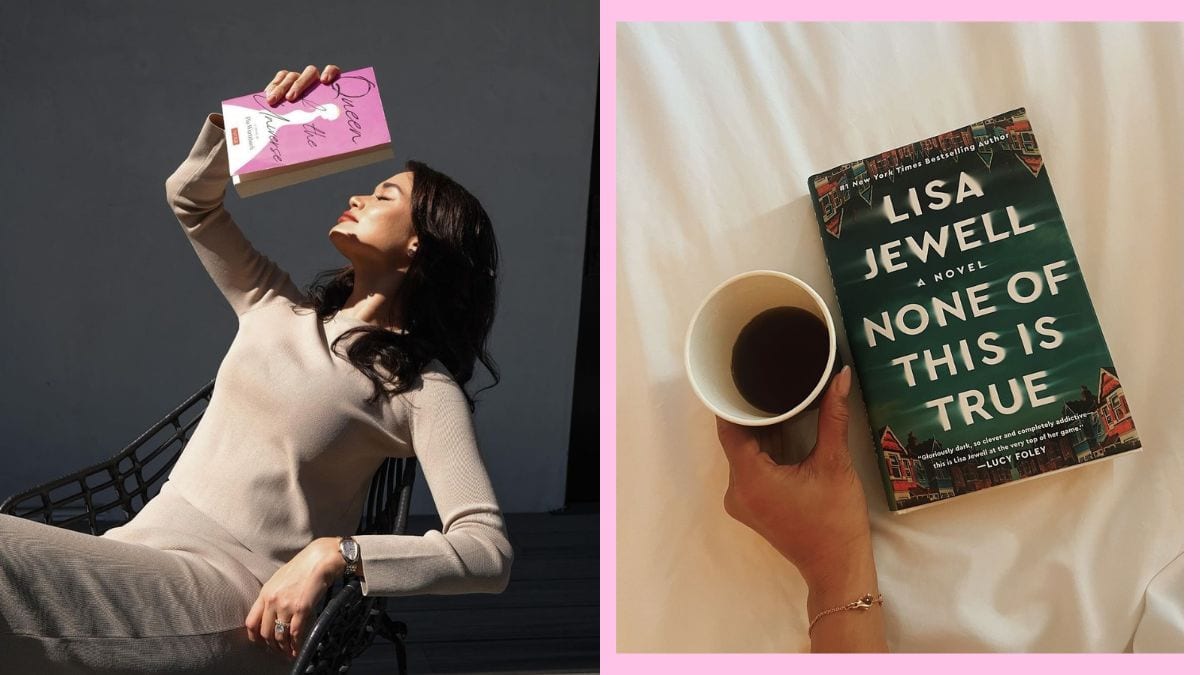
Need Book Recos? Let Bea Alonzo, Lovi Poe, And Pia Wutzbach Guide You On The Best Reads
Dive into these pages.
READ HERECheska is Cosmo's Lifestyle Editor. She writes what your group chat won't—on trends, dating, and 2 a.m. "Should I text him back?" thoughts. (You shouldn't.)