Picture this: your crush arrives on campus every week with a fresh rose and a handwritten note. Soon, the bouquets are getting grander and you're getting a "good morning" text a minute before your alarm rings. When you turn on notifications after focusing on a group project, there are dozens of heartfelt messages worried about your well-being. He even manages to track down and PM your groupmates. Before you can even decide if this crush is more than a semester-long attraction, he starts using heavy words like "love," "soulmate," and "future." He's just your type, though, so it's cute rather than creepy...for now. But is it true romance, or emotional manipulation?
In the Philippines, ligaw, or courting, is steeped in gestures. We know the expectations: serenades, love letters, gift-giving, family introductions. Even though modern dating has permeated our local culture, vestiges of traditional courting remain highly valued for those seeking love. And who wouldn't want such attentive effort laser-focused on them? When done well, suitors win hearts through patience, commitment, and deeply felt affection.
By contrast, love bombing accelerates intimacy at lightning speed. It perverts the ligaw tradition with the aim to possess rather than to profess. With the grandeur and quickness of it all comes an immense amount of emotional pressure and romantic obligation on the person being courted to reciprocate in equal measure. The result is counterfeit affection masking a toxic power-play.
ADVERTISEMENT

What exactly is love bombing?
Jessica January Behr, director of Behr Psychology, defines love bombing as "when an individual idealizes their partner and barrages them in intense 'all good' love and affection…so they can receive the reciprocated love and affection they need to maintain their self-worth." But in fact, it is not "all good." She goes on to say that it is a learned behavior often linked with the clinical disorder known as narcissism.
Narcissism expert Dr. Ramani Durvasula expands on this by noting, "While it may sound like a dream, the intent is actually to confuse and blind you, to put you in a position where you can be controlled."
Therefore, love bombing is a form of emotional manipulation where someone overwhelms another with affection to gain control. Later, it is withdrawn or turned conditional. The Cleveland Clinic identifies love bombing as having three main phases:
Other red flags to watch out for throughout the relationship include:
Note that while red flags are easier to see in other people's relationships, the intoxicating nature of love bombing makes it so that one's clarity about their own relationship becomes compromised when they become a victim of it.
Still, it has the same consequences as other types of abuse. Many victims often experience anxiety, confusion, eroded self-esteem, and emotional dependency. Many find themselves doubting their instincts, rationalizing manipulative behaviors, or feeling trapped in an emotional rollercoaster. Such a dynamic can leave long-lasting scars that manifest as distrust, depression, and difficulty in future relationships.
ADVERTISEMENT
Romance vs. Love Bombing
So, how can you tell the difference before it's too late? If you're coming from the Philippine context, don't be so quick to dismiss all romantic gestures. After all, it's still possible to act on one's affection in ways that are respectful, intentional, and paced. But when those gestures are turbocharged in a very short period, it's worth interrupting the honeymoon bliss to take a closer look at what's happening. Keep an eye out for these distinguishing traits:
ADVERTISEMENT
Courting
ADVERTISEMENT
Love bombing
Real romance uplifts both partners, leaving space for autonomy and emotional balance. Meanwhile, love bombing suffocates by design.
ADVERTISEMENT
Breaking the cycle of love bombing
If you're noticing red flags in your own relationship, here are expert-backed strategies to reclaim your emotional autonomy:
ADVERTISEMENT
Remember: healing is real.
A toxic relationship doesn't define your worth. Real love can flourish after pain. And you'll recognize it because it will be rooted in respect, patience, and understanding. But it starts with being secure as a single person who does not depend on external validation for self-worth.
In a culture whose romantic tradition is based on performing sweet gestures, it's easy to mistake love bombing for healthy affection. But don't doubt yourself too much: wanting and deserving to be treated like treasure is absolutely valid. At the same time, not everyone who spoils you is trying to control you. Still—be alert. Examine those new-relationship butterflies with clear eyes. Listen to sound advice from the people who care most about you. And trust in yourself when you feel uncomfortable. Healthy love exists—and starts in you.
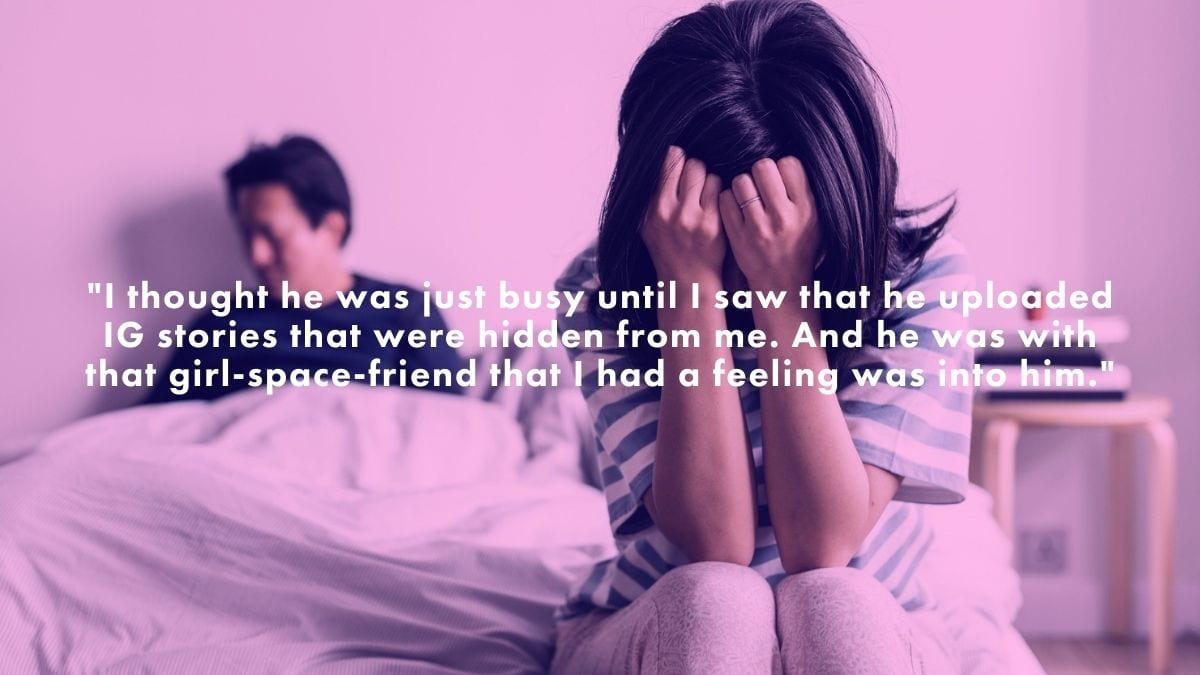
Relationship Red Flags These Pinays Wish They Hadn't Ignored
'I was so stupid to forgive and give him a second chance.'
READ HEREPauline Lacanilao Arnould is a contributing writer with over 100 bylines across the Philippines’ top print and digital publications. Her work spans culture, travel, relationships, fashion, art, books, and more. A former writing and literature professor at Ateneo de Manila University and the University of the Philippines, she blends academic curiosity with accessible storytelling—striving for nuance, depth, and cultural sensitivity in every piece. Beyond articles, she publishes poetry, creative nonfiction, zines, and handcrafted children's books. You can follow her on Instagram @pauline_arnould.