Stuck Searching For The Perfect Journaling Style? Here's What Actually Works
by Elisse Dizon
Published on Mar 16, 2026
Raise your hand if you’ve spent an embarrassing amount of time doomscrolling on TikTok. (Guilty!) There are different motivations for doing it, but in my case, my doomscrolling is the result of the fruitless search for the best journaling style. Somewhere along the way, journaling—an activity meant to be personal and freeing—became another way to optimize productivity.
For college students, the pressure feels real. We are all keeping up with deadlines, org work, internships, friendships, and the constant need to build a good future. Thus, the quest for the "right" journal never really stops; we're always chasing a system that perfectly matches our personality.
To figure out this journaling dilemma, Cosmo spoke with Belle Mapa, a writer, certified expressive arts (EXA) facilitator, and co-founder of Healing HeARTs PH, a community that helps people heal and connect through art and play. She's been hosting journaling workshops for mental health since 2017, long before journaling became the aesthetic trend it is today.
"Humans are much too fluid and nuanced and changing to be confined by personality types," Belle explained. "There's no one-size-fits-all with journaling, either—especially with so many styles out there."
Hearing this opened me up to a much better way of looking at the blank page.
And honestly? She's right. You're not the same person during midterms week as you are during your healing era. Why should your journal be? Instead, you should be adapting your journaling style to your mood, your energy, and the season of life you're in. Here's how you can figure out what might work for you based on where you are right now.
The "Busy" Season
If you are in your busy girl era, something low-effort and low-commitment with a clear benefit is for you. Bonus points if it actually helps you keep your life together. Belle says the format matters more than the aesthetic. "Planners help with structure and offloading mental work," she explains.
Using planners helps structure your thoughts and makes them easier to follow. It helps you to be more accountable. It is also a great way to break large tasks into smaller, manageable steps. Writing down all your to-dos in a handy planner clears your mind and reduces the feeling of overwhelm. The result: Bringing back your A-game and sense of control!
For many busy students, even something as simple as a pocket notebook can work. It is just a small space to dump thoughts, to-do lists, or random ideas throughout the day. This also serves the same function as a planner, but in a less structured way, allowing your free will to take over.
Digital journaling is also fair game. "Yes, the Notes app counts, and it's actually one of the best apps for journaling," Belle says. Others prefer platforms like Notion or Obsidian, where you can build a second brain or digital garden for all your thoughts. Using these platforms can be more accessible to college students, as they are on the same device as their schoolwork and other relevant files.
And if traditional journaling still feels like too much? You might already be doing it. "You can even turn your Instagram or TikTok into a memory garden," Belle adds. Low effort, high reward.
The "Need For Reflection" Season
We all go through a season where we want to understand how we feel and how we interpret our emotions, thoughts, and well-being. According to Belle, any practice that puts you in a state of flow can help unlock deeper meaning.
Meditative journaling for deeper reflection is often recommended, "Writing is still the best place to start for deeper reflection," she says. This can look like morning pages, journaling prompts, scripture journaling, cartomancy journaling, or even keeping a dream diary. Essentially, any form of long journaling that allows you to sit with your thoughts can create space for clarity.
Reflection doesn't always have to be words on a page. Belle also recommends sketching, especially live or en plein air, because it trains you to notice even the small and mundane things.
The "Creative Exploration" Season
When it comes to expanding creativity, Belle says, "The brain processes and expresses information in multiple modalities." It's why creative journaling works best when you tap into different languages of imagination on the page. In expressive arts, Belle describes this as a low-skill, high-sensitivity approach, meaning the goal is to create something that feels simple and enjoyable.
Visual styles like mind maps, doodles, or symbols are a great place to start, especially if you're someone who thinks better in pictures than paragraphs.
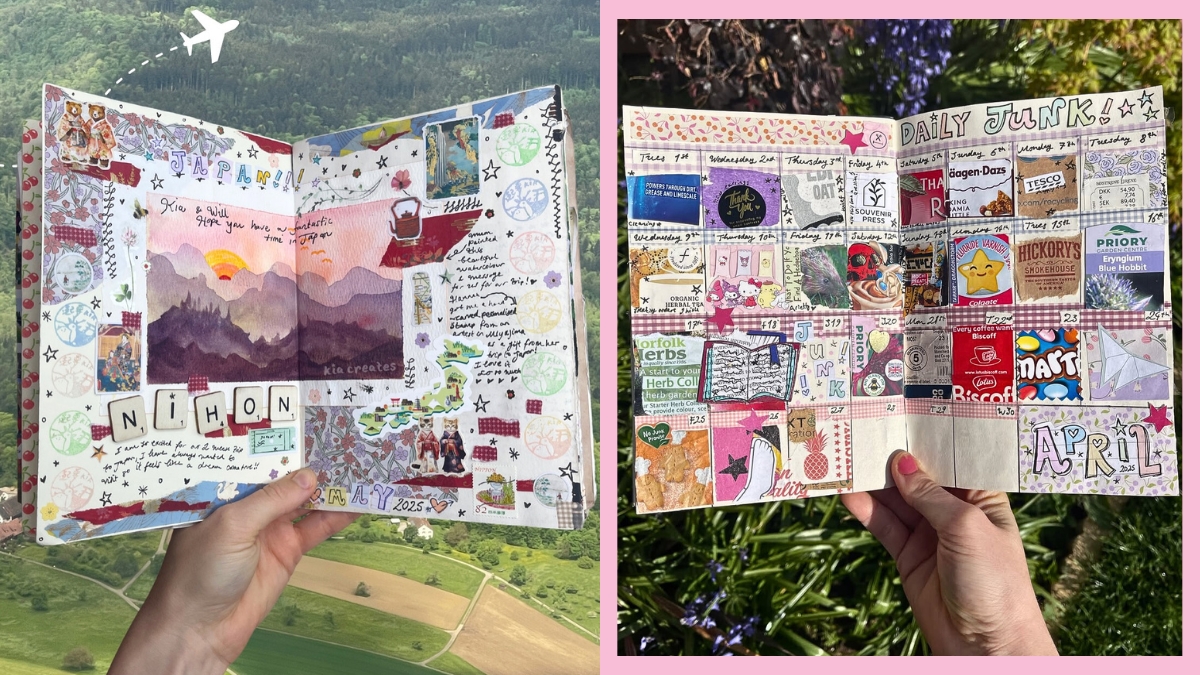
You can also experiment with mixed media, like junk journaling, where photos, paint, scraps, stickers, and handwriting all live on the same page. It's messy but sometimes that's exactly what you need when words alone aren’t enough.
Creative practices such as art journaling can also serve as a good tool for memory-keeping or making sense of the things we consume daily.
The "Go Getter" Season
Lastly, journaling can also be powerful during seasons when you're focused on growth and goals. The key is choosing a format that stays with you over time. "I've achieved most of my yearly goals because I wrote them in my journal and tracked the progress along the way," Belle shares. Writing things down makes your intentions tangible, and returning to them regularly helps you stay aligned with your bigger why.
Vision boards are a good way to start; this allows you to visualize your goals and map out your ambitions. Seeing this regularly conditions your mind to clearer motivations and makes it easy to return whenever you need direction.
Bullet journaling, particularly the rapid logging style, is another effective way to track progress. It keeps goals actionable and organized without needing an elaborate system. This system stands out because it requires little of your time yet intentionally keeps you on the right track.
For those college dreamers who prefer more structure, goal-tracking journals also work well. This has layouts that make setting intentions, revisiting plans, and reflecting on how far they’ve come easier.
So if you ever find yourself doomscrolling again in search of the perfect journaling style, take this as your sign to stop doomscrolling and open a blank page instead. Happy journaling! 😊
Junk Journaling Is The Low-Maintenance Hobby That Your Analog Era Needs
What you gon' do with all that junk? 🫨
CONTINUE READING